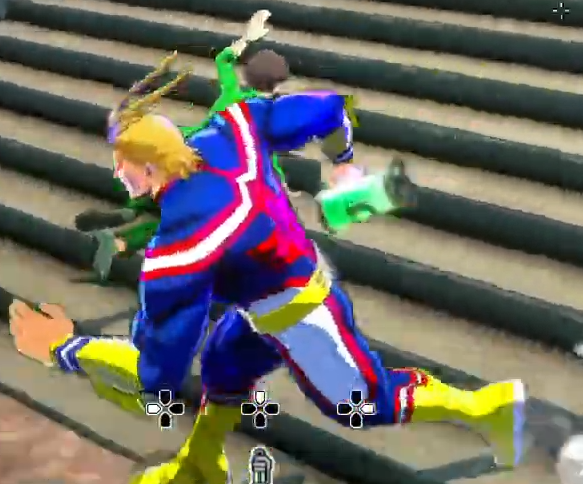
The CBT-1 was the first Closed Beta and overall Beta, as well as the very first playable version released. It started in February 2nd 2022 in Japan and ended in February 7th 2022. This version lacked many of the features we rely on in the present days, such as Revive Cards and Plus Ultra.
New Battle Styles











Back then, Ochaco Uraraka was a Technical character, while Himiko Toga was a Rapid.
New Costumes
In CBT-1, R skins didn't seem to exist (the silver-frame tier given to recolors from an SR costume), so instead they were categorized as C, the default tier.
Izuku Midoriya
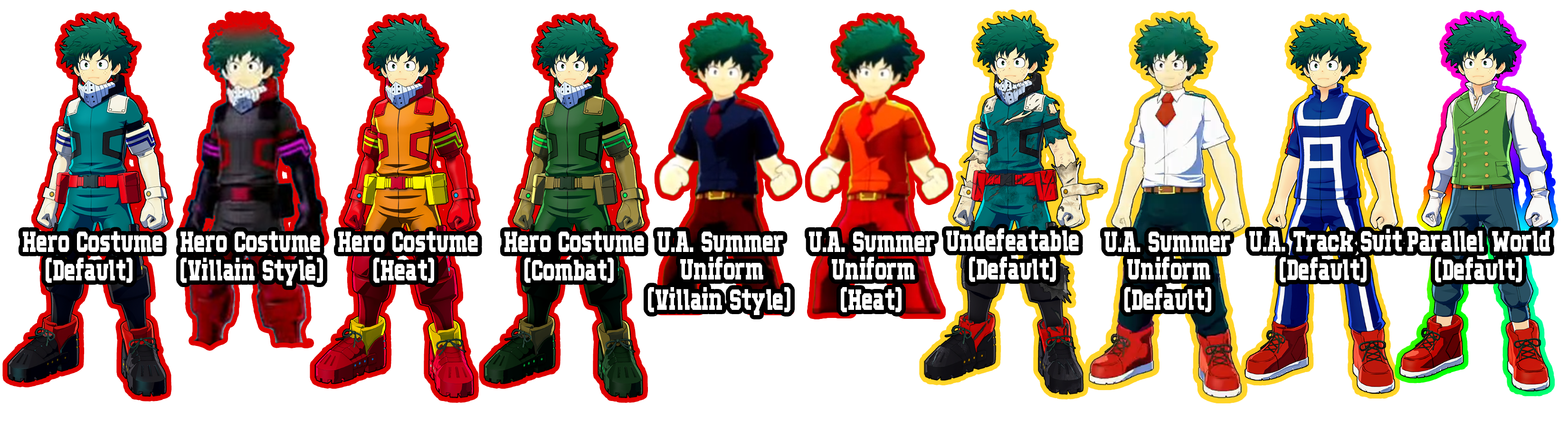
In the CBT-1, Deku's Hero Costume was Shoot Style instead of his current Hero Costume. His undefeatable costume was an SR instead of PUR. He also had access to his U.A. Summer Uniform costume and two recolors for this fit, which never re-released after their removal.
Katsuki Bakugo
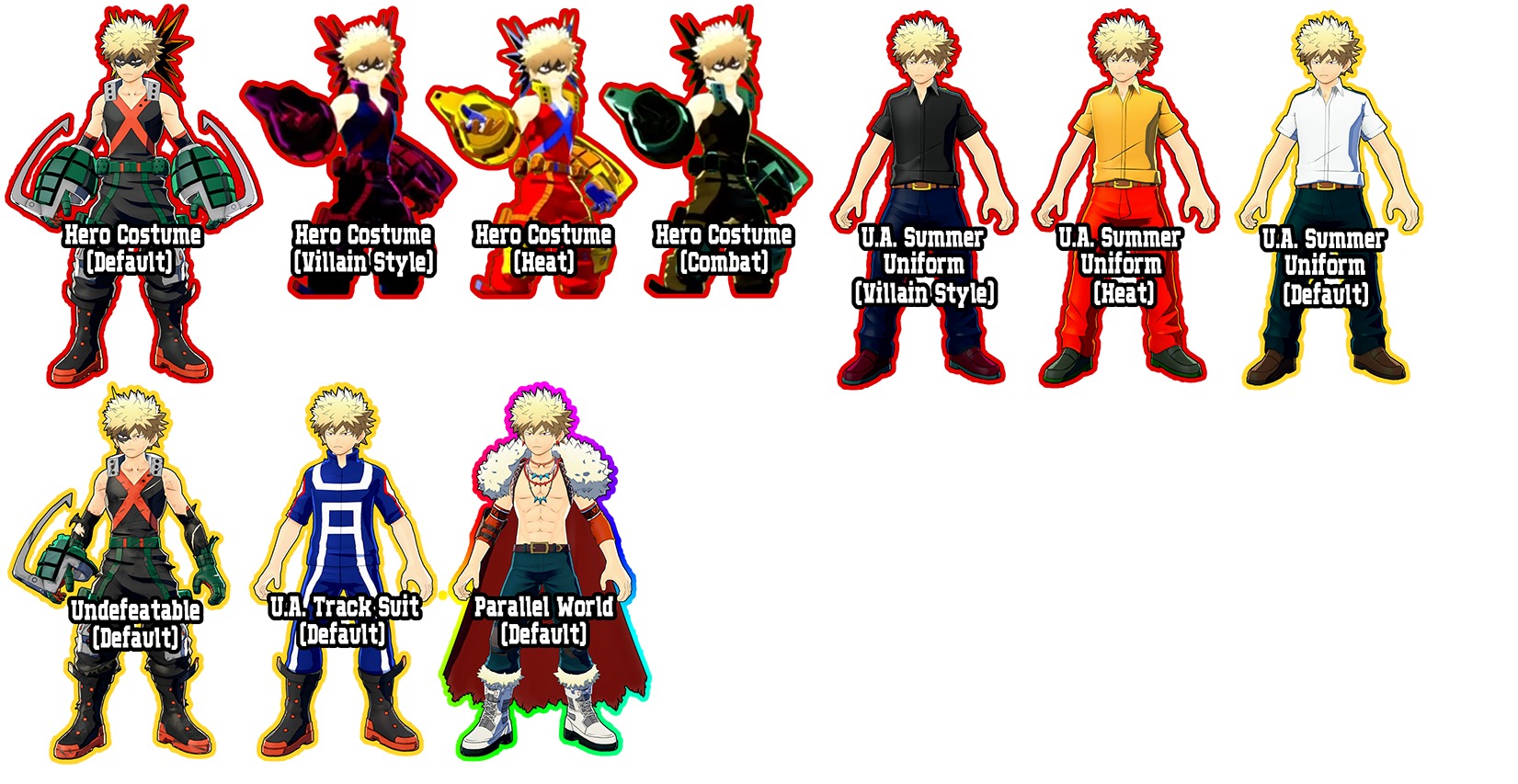
Back in CBT-1, Bakugo's undefeatable costume was an SR, not a PUR. His Villain Style, Heat and Combat recolors also looked quite different.
Ochaco Uraraka
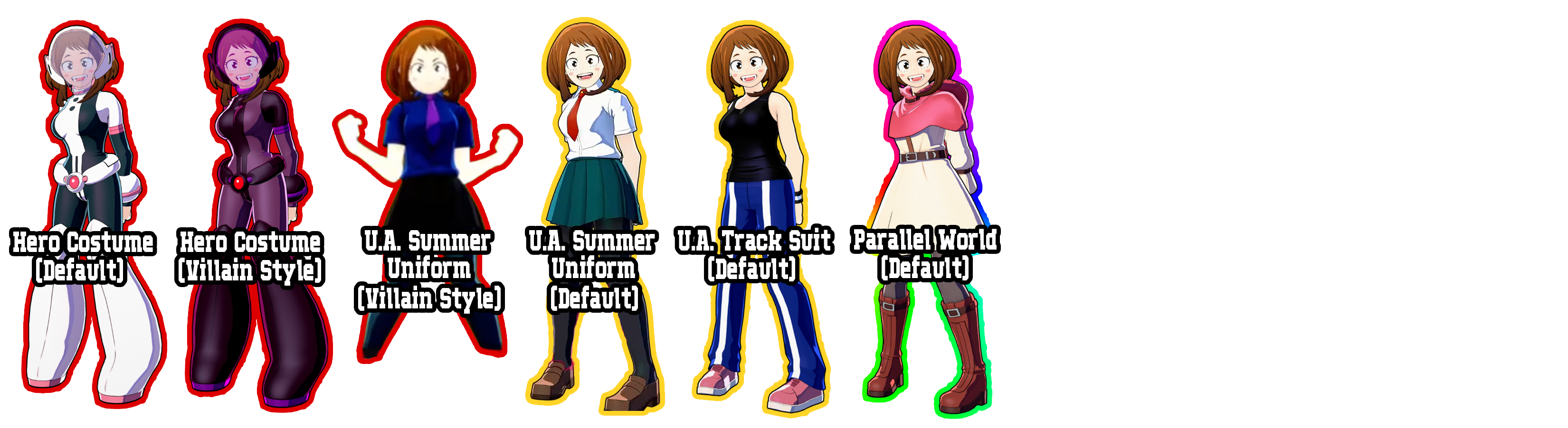
In CBT-1, Uraraka had a currently unavailable costume, that being her U.A. Summer Uniform (and its Villain Style recolor), which never released after its removal after the betas.
Shoto Todoroki
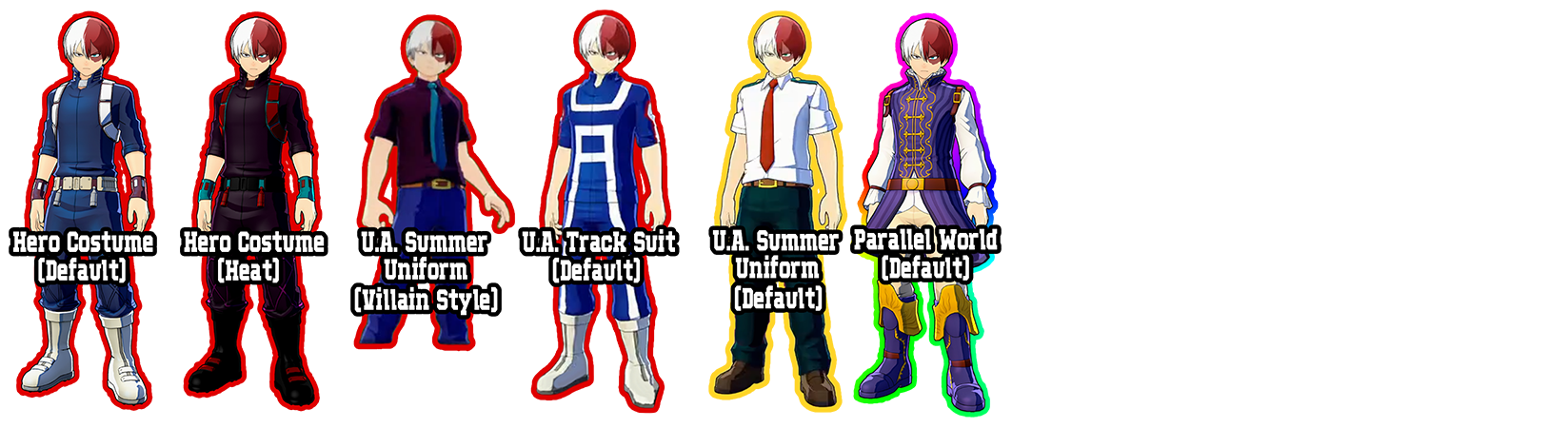
During the times of CBT-1, Shoto had access to U.A. Track Suit and U.A. Summer Uniform (+Villain Style recolor), both being costumes that never released after the beta period.
Tsuyu Asui
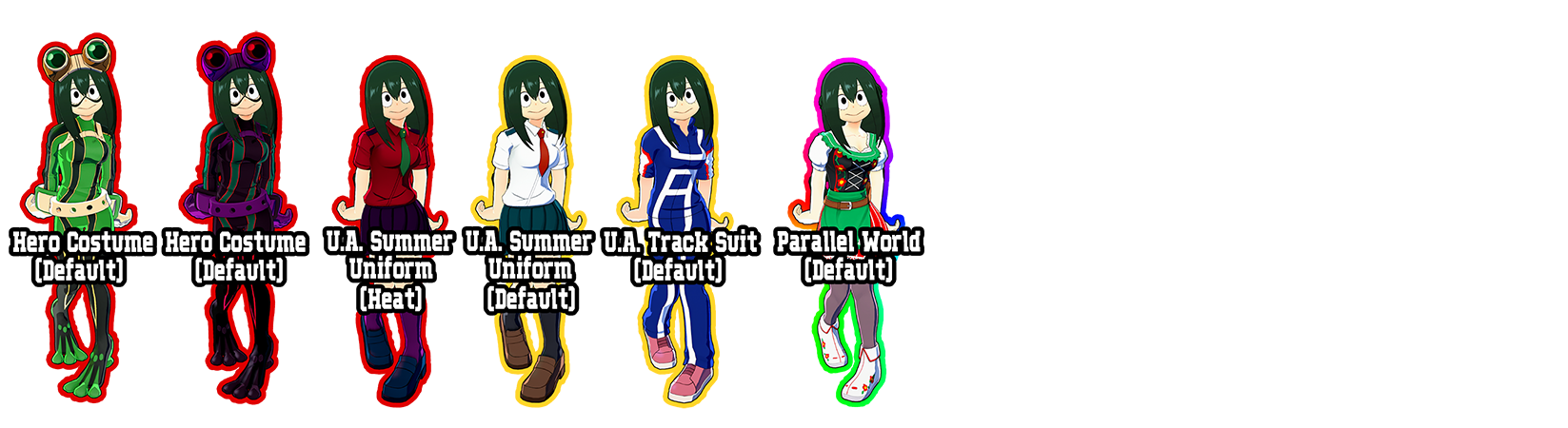
No changes between CBT-1 and current version for Tsuyu Asui's costumes, but she had access to U.A. Summer Uniform (Heat), a recolor never re-released after the betas.
All Might
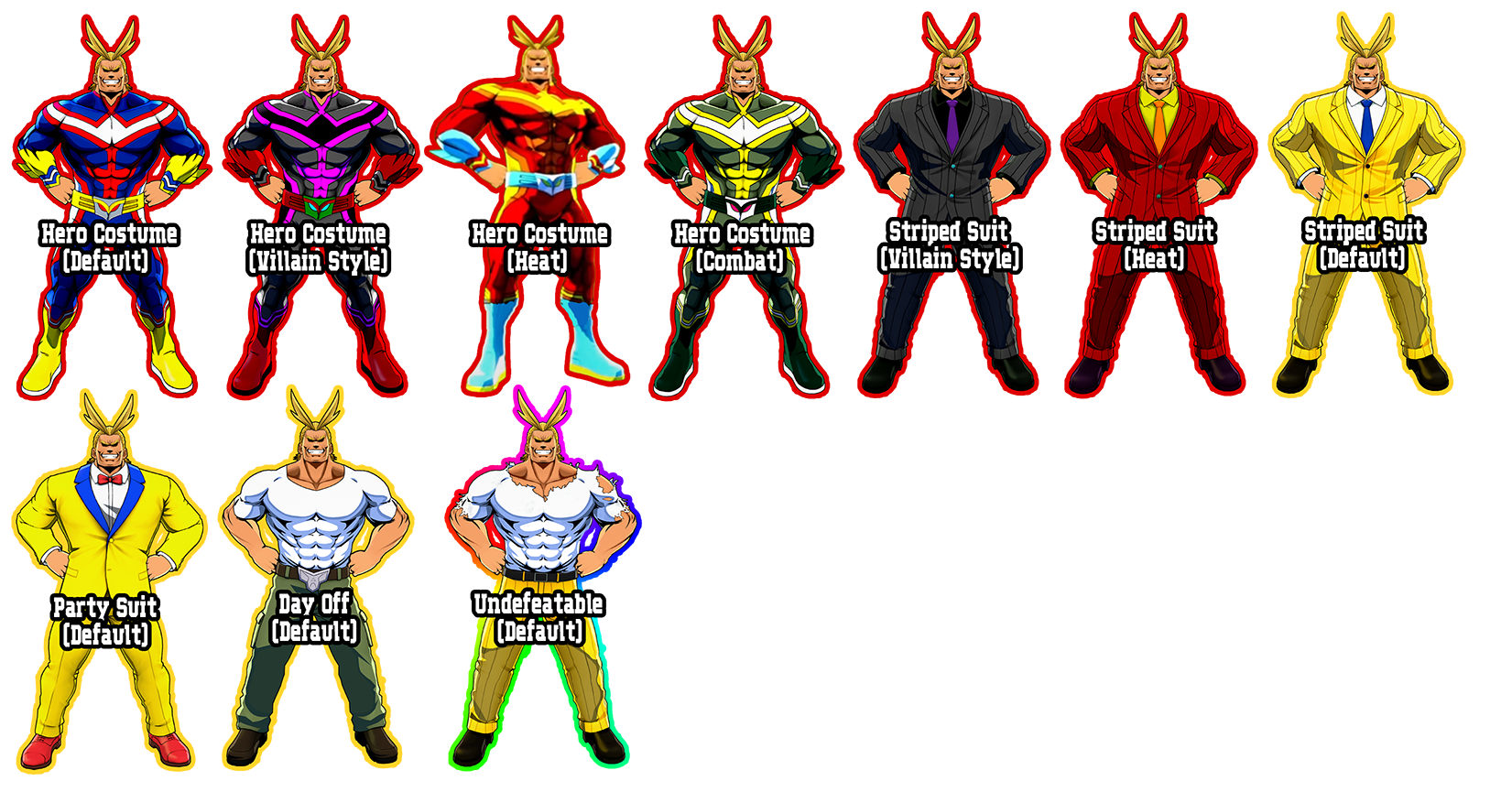
No changes between CBT-1 and current version for All Might's costumes.
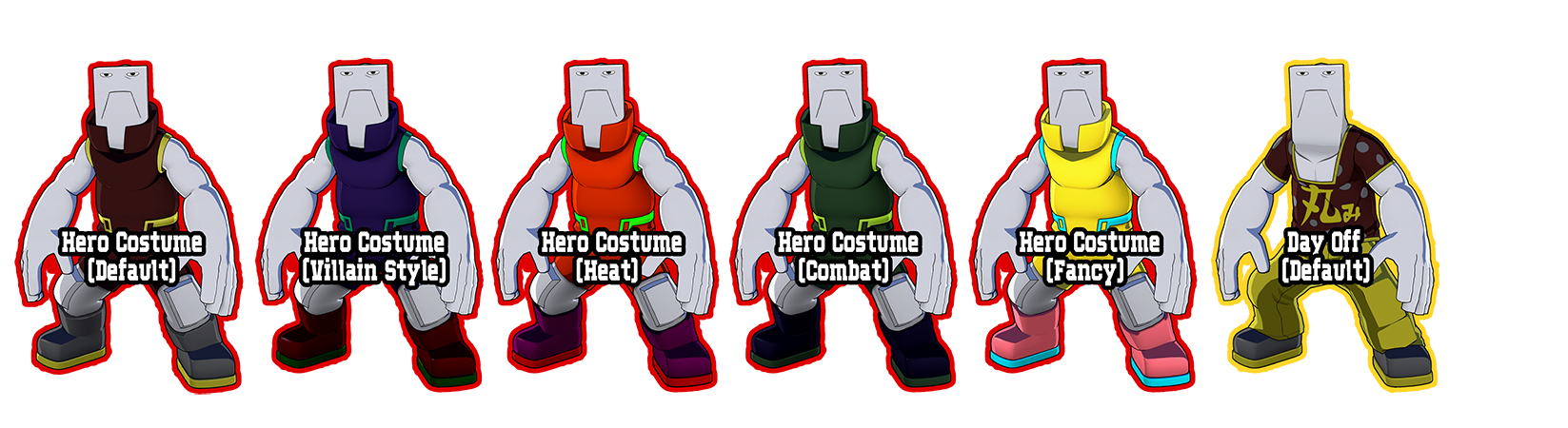
Cementoss
Mt Lady
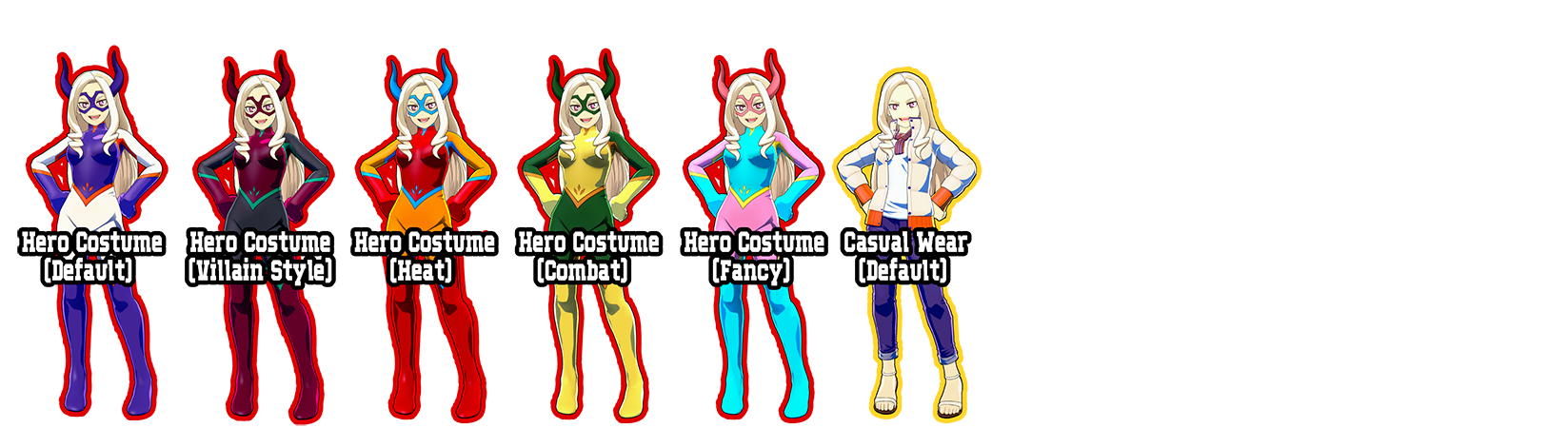
In the days of CBT-1, Mt Lady's Casual Wear costume was SR instead of PUR.
Tomura Shigaraki
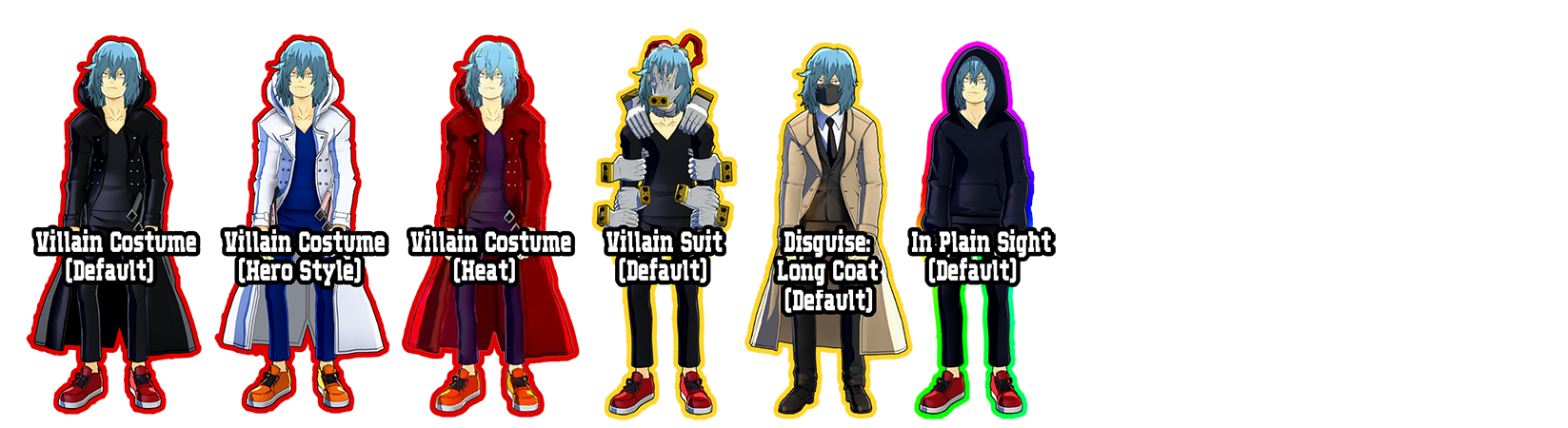
In CBT-1, Shigaraki's Heat Villain Costume had a different color palette, focusing more on reds as opposed to the current orange and yellow. His Disguise costume was SR instead of PUR, while his hoodie costume was PUR instead of SR.
Dabi
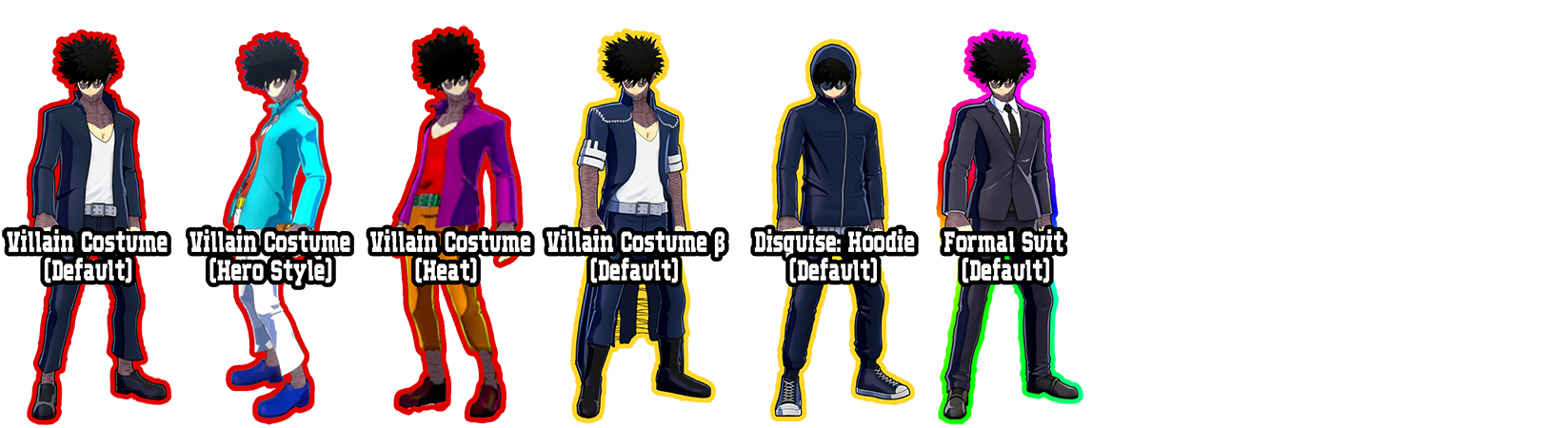
Dabi's Villain Costume Alpha ver. used to be his default costume, while his Beta ver. costume was an SR. They swapped rarities in OBT-1. Dabi's Hero Style and Heat recolors were also different back then. His Hoodie and Formal Suit costumes used to be the opposite rarity, Hoodie being SR and Formal Suit being PUR, which is no longer the case in current versions.
Himiko Toga
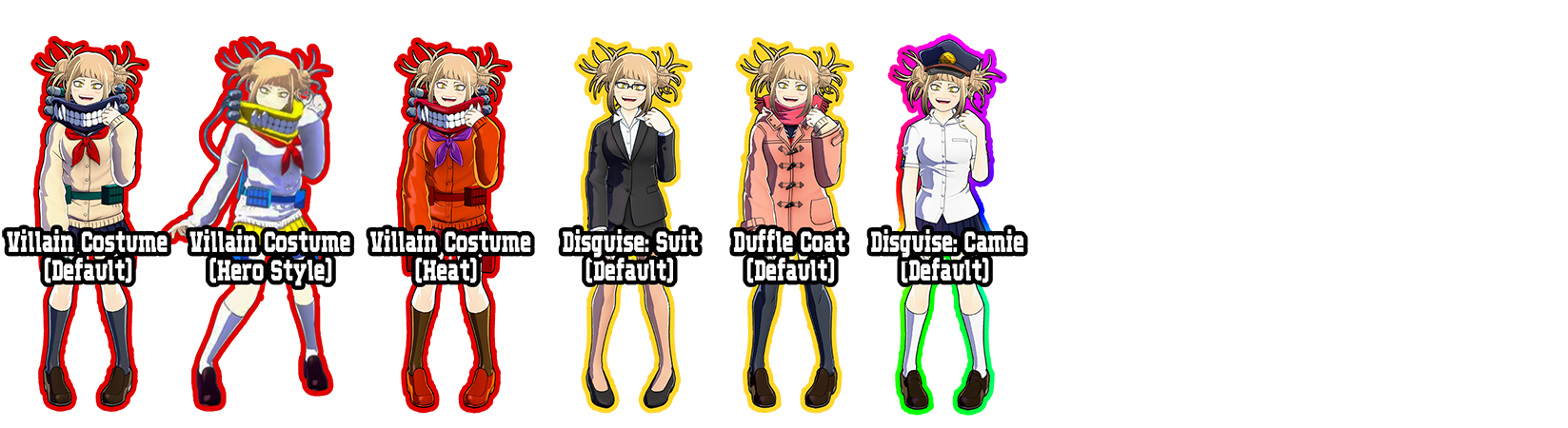
Himiko Toga's Villain Costume (Hero Style) used to be white instead of green. Her Duffle Coat and Disguise: Suit skins were SR, but in current versions they are PUR. Her Disguise: Camie costume used to be PUR, but then it got downgraded to SR later.
Mr. Compress
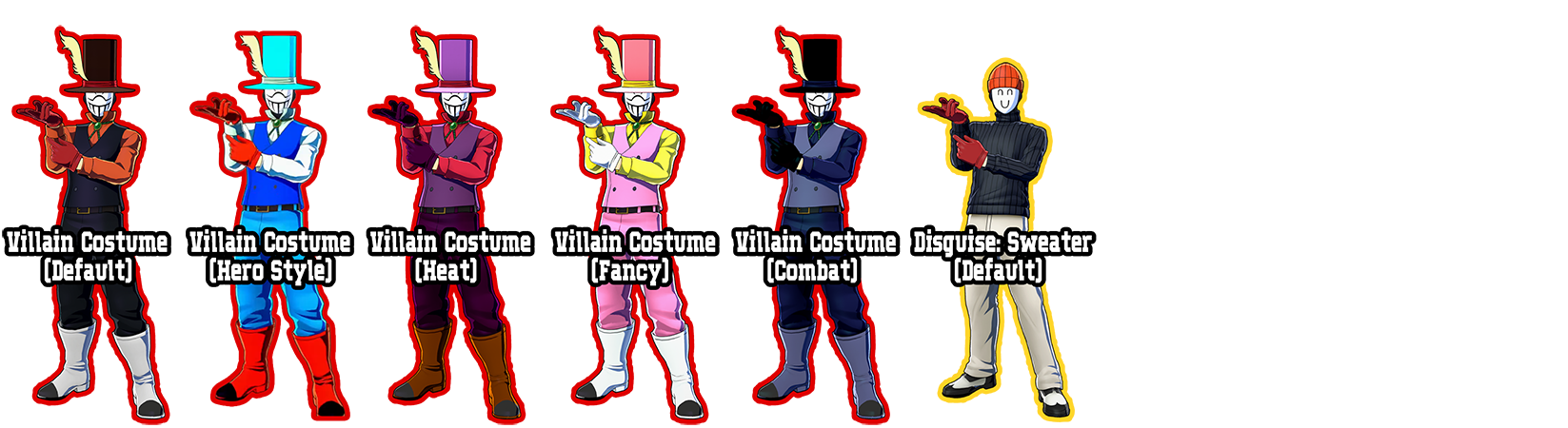
During CBT-1, Compress' Hero Style variation for his Villain Costume was cyan instead of the current green one, and his disguise costume was SR instead of PUR.
Costume Lines Introduced
- Hero Costume
- U.A. Summer Uniform
- U.A. Track Suit
- Undefeatable
- Parallel World
- Striped Suit
- Party Suit
- Day Off
- Casual Wear
- Villain Costume
- Villain Costume β
- Formal Suit
- In Plain Sight
- Disguise
New Stages and Areas
USJ (Beta)
The first beta came with the very first map My Hero Ultra Rumble has seen, the USJ. This stage features the following areas: Fire Zone, Typhoon Zone, Landslide Zone, Collapse Zone, Aquatic Zone, Mountain Zone and Plaza.
Fire Zone
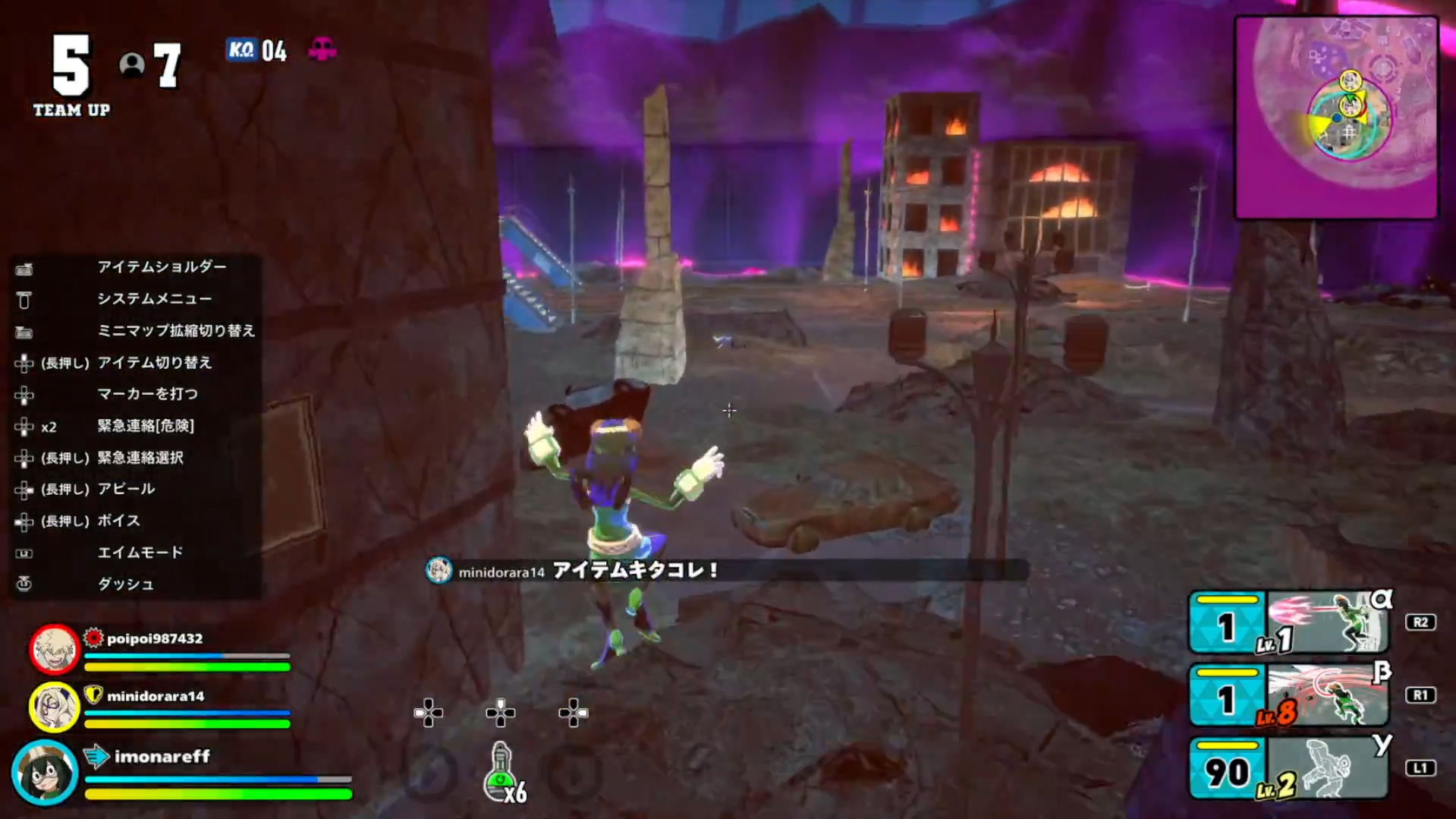
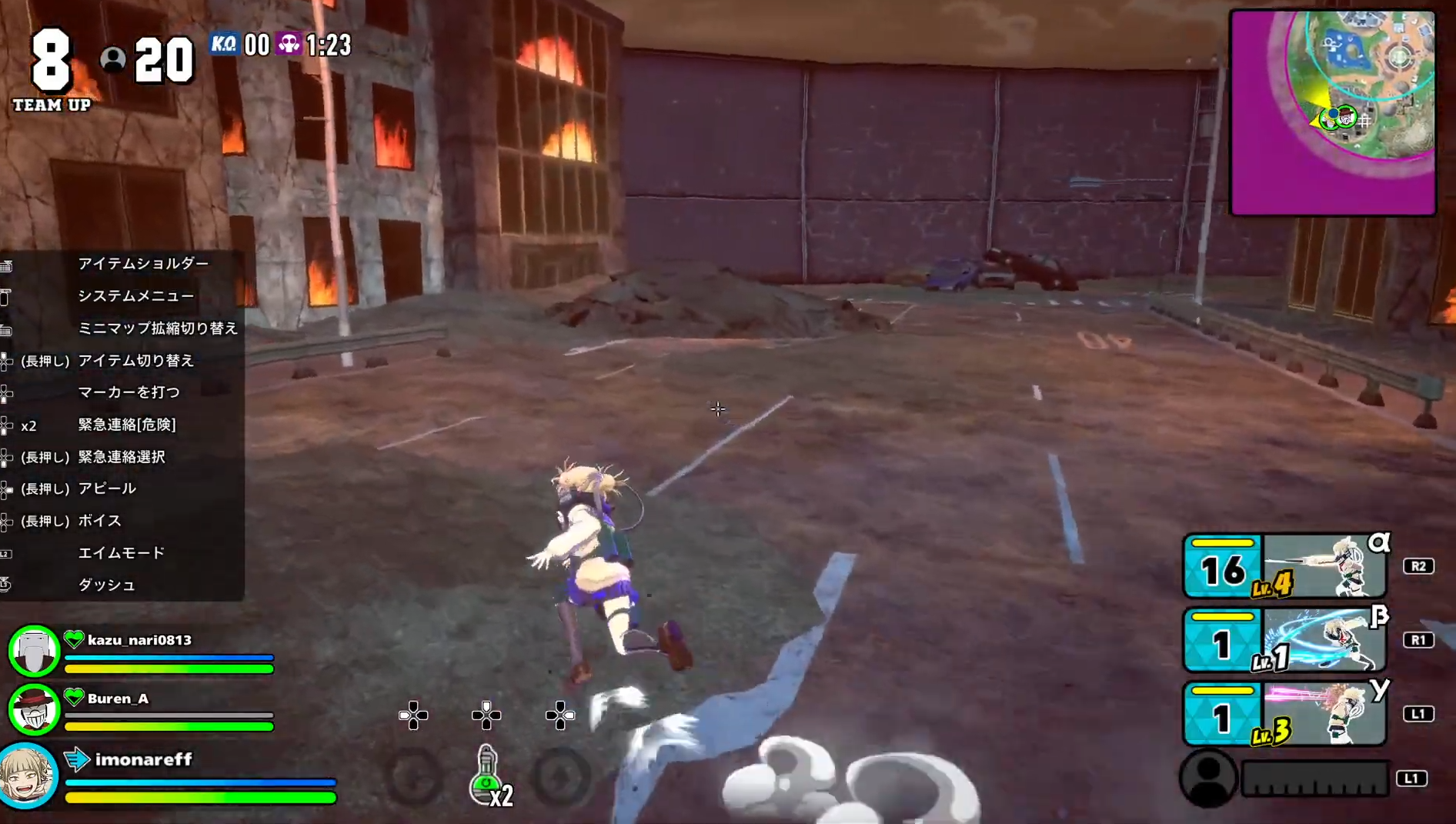
In the CBT-1, Fire Zone's buildings were all destructible, a feature currently gone, as in present days none of the buildings there can be destroyed. Besides roof holes, Fire Zone only had one exit, the one that points towards the Plaza, the rest of the dome was sealed. Some parts of the dome's walls were destructible (which later the developers would make it so that those walls are destroyed by default when the match starts), mainly the walls that were facing Aquatic Zone, as those facing Mountain Zone couldn't be broken.
Typhoon Zone
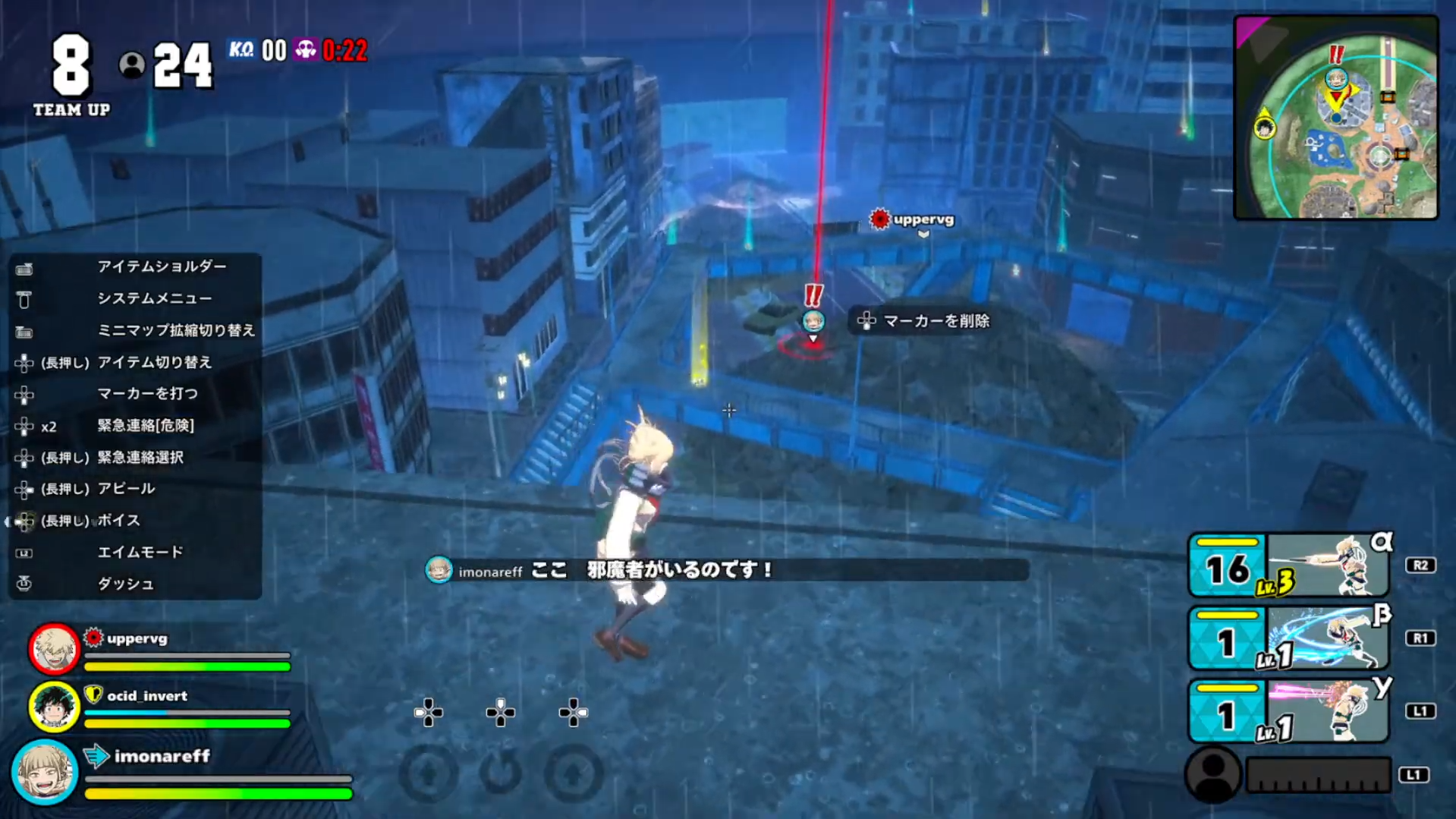
Typhoon Zone has remained mostly unchanged throughout the history of My Hero Ultra Rumble, as such, there isn't much to say here.
Collapse Zone
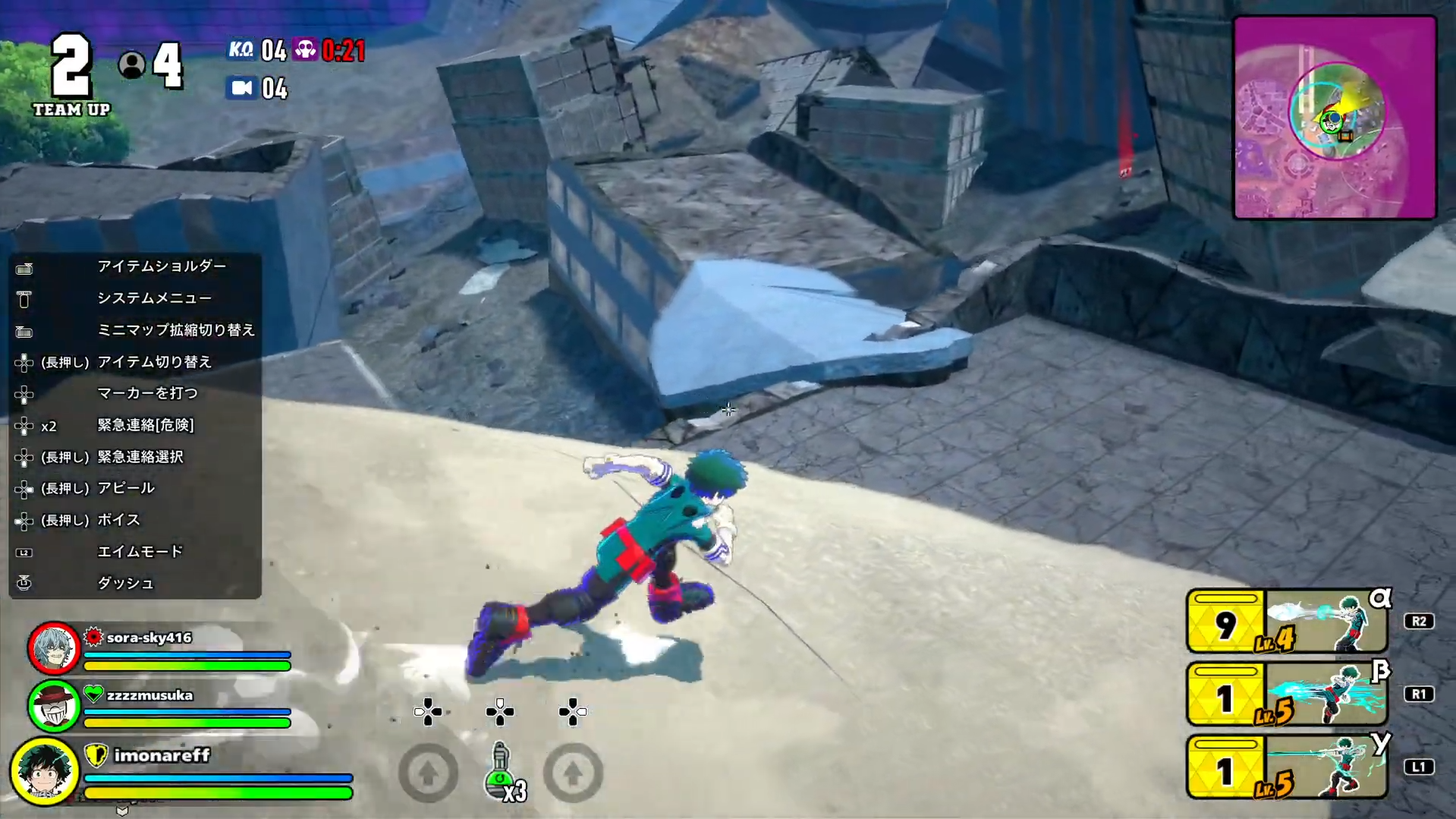
Collapse Zone has been pretty much unchanged from a structural standpoint, but the textures of the buildings looked fairly unpolished, making the area aesthetically poor.
Landslide Zone
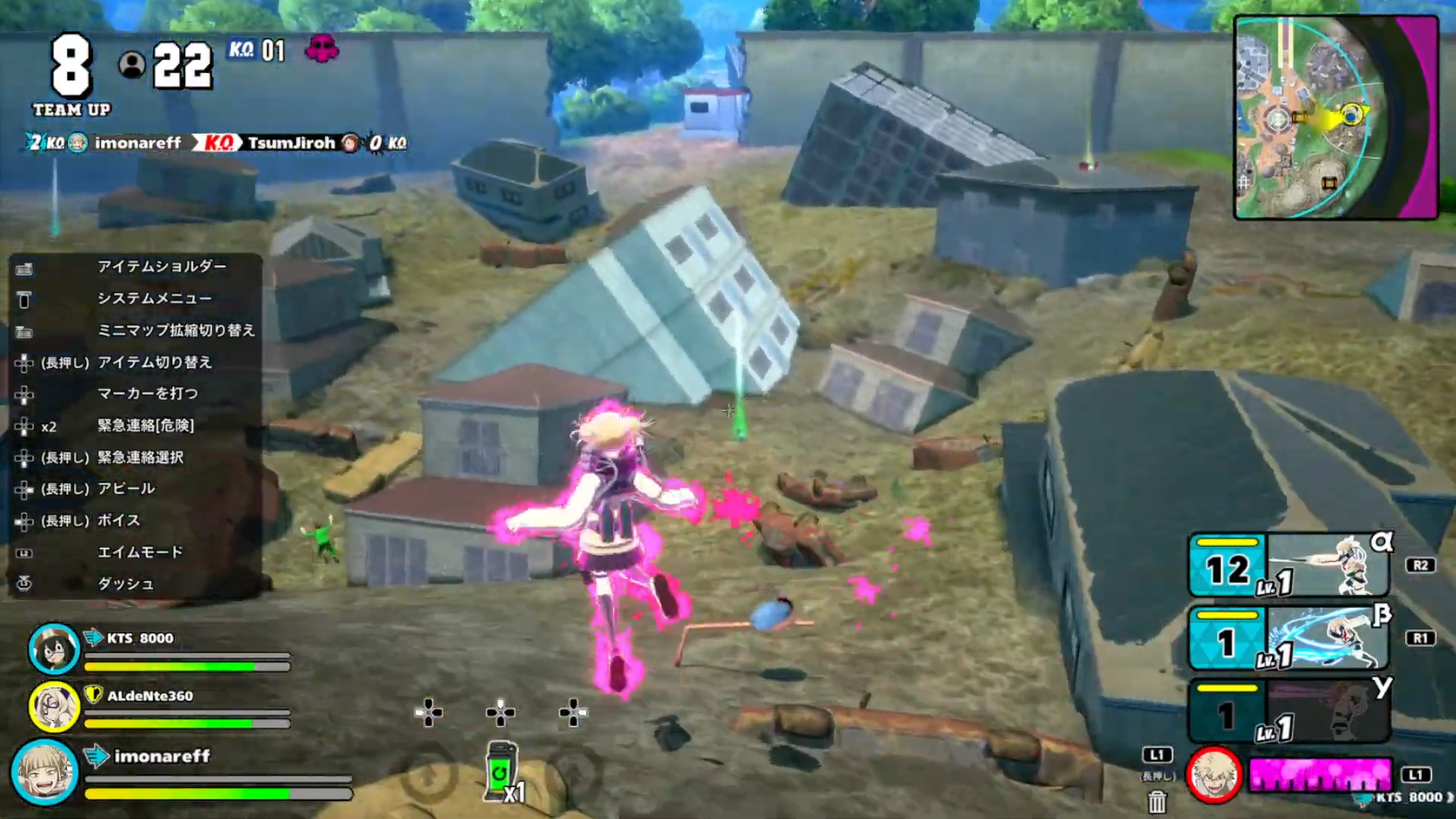
Landslide Zone has always looked and played basically the same.
Mountain Zone
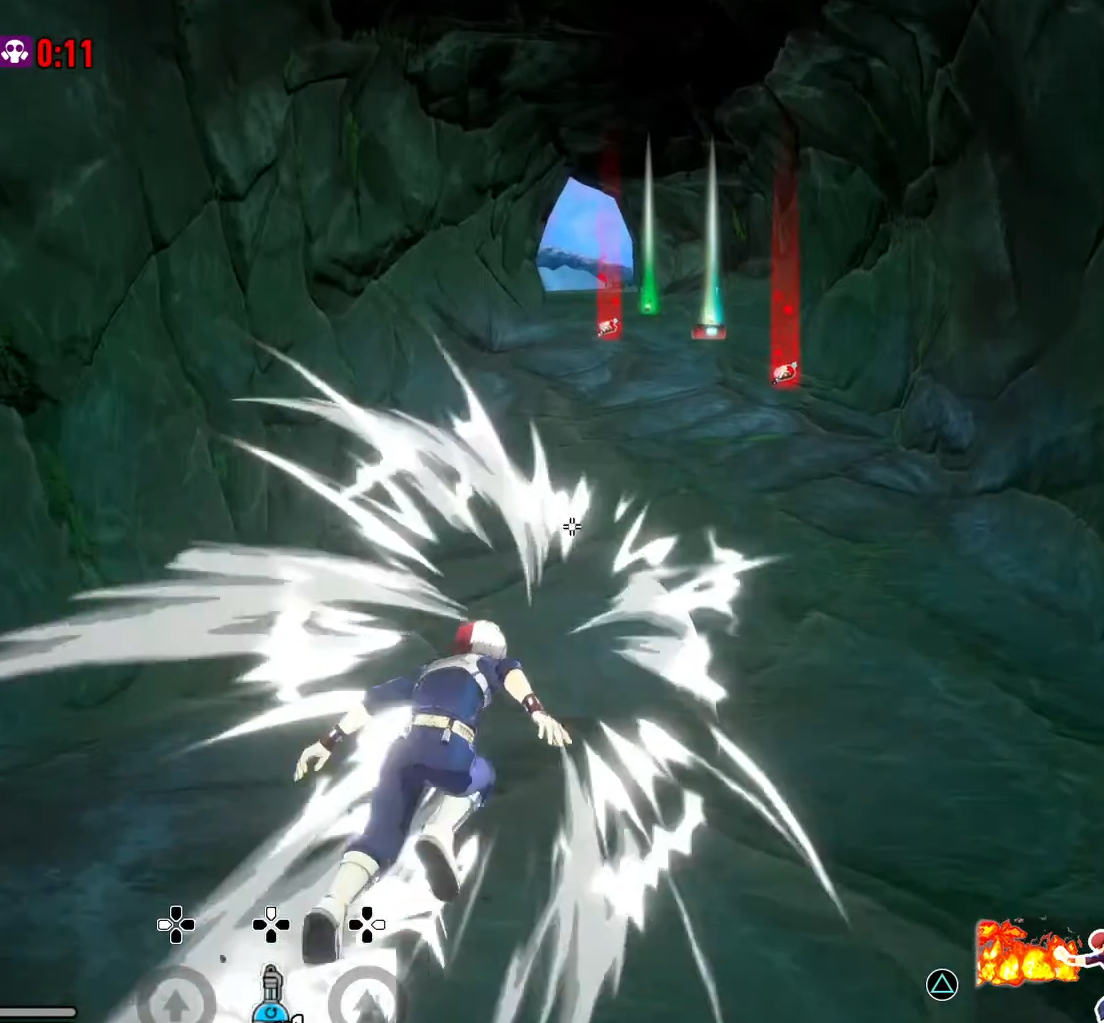
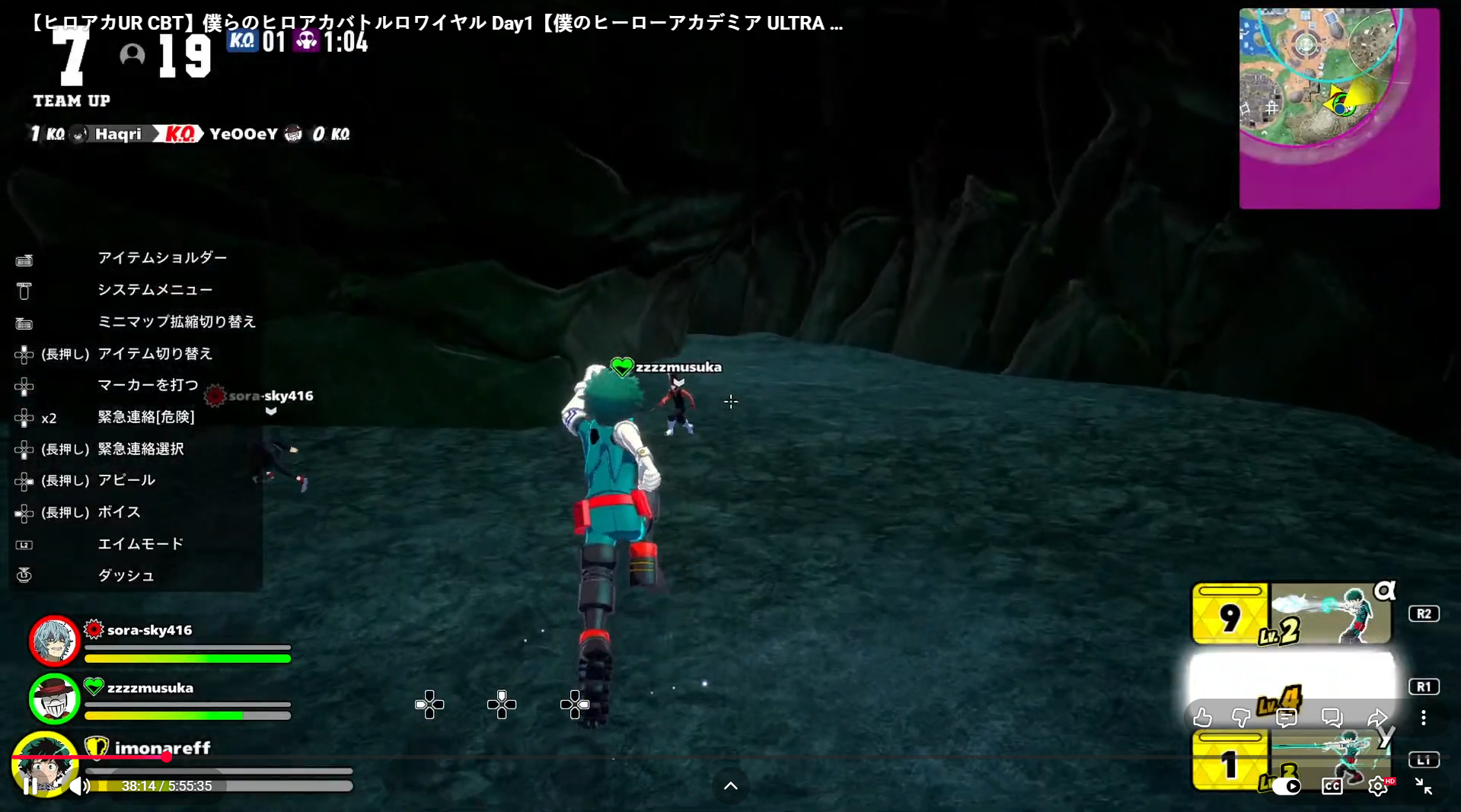
CBT-1's Mountain Zone used the version from USJ Version 1, which you can still play in Custom Matches and Tutorial mode. However, the interiors of Mountain Zone in CBT-1 didn't yet have the "mines" aesthetic just yet, as such, the interiors looked more like cavern tunnels.
Aquatic Zone
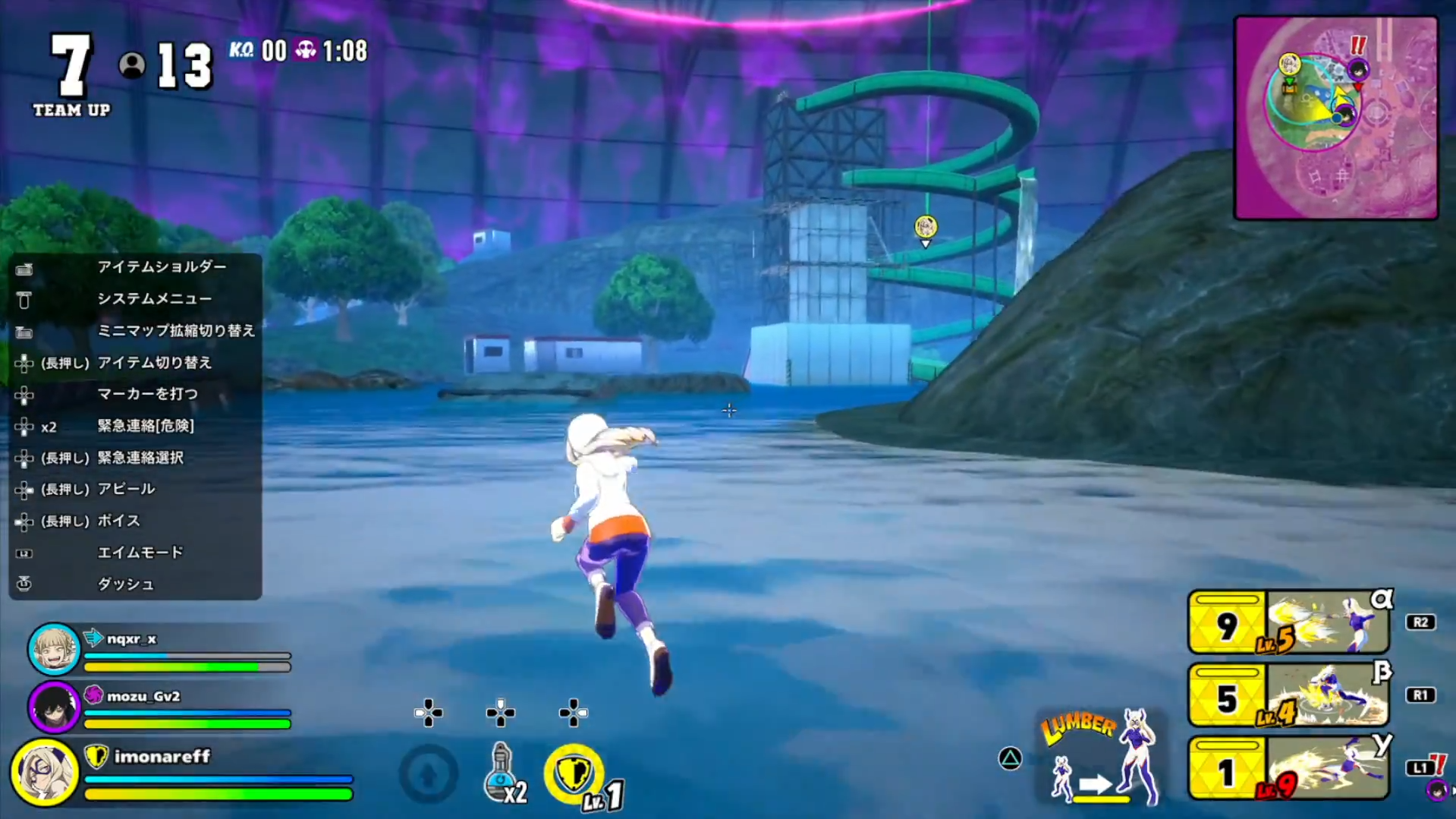
CBT-1 used the Aquatic Zone featured in USJ Ver01 and USJ Ver02. In comparison to those, the original Aquatic Zone wasn't much different.
Plaza and Surroundings
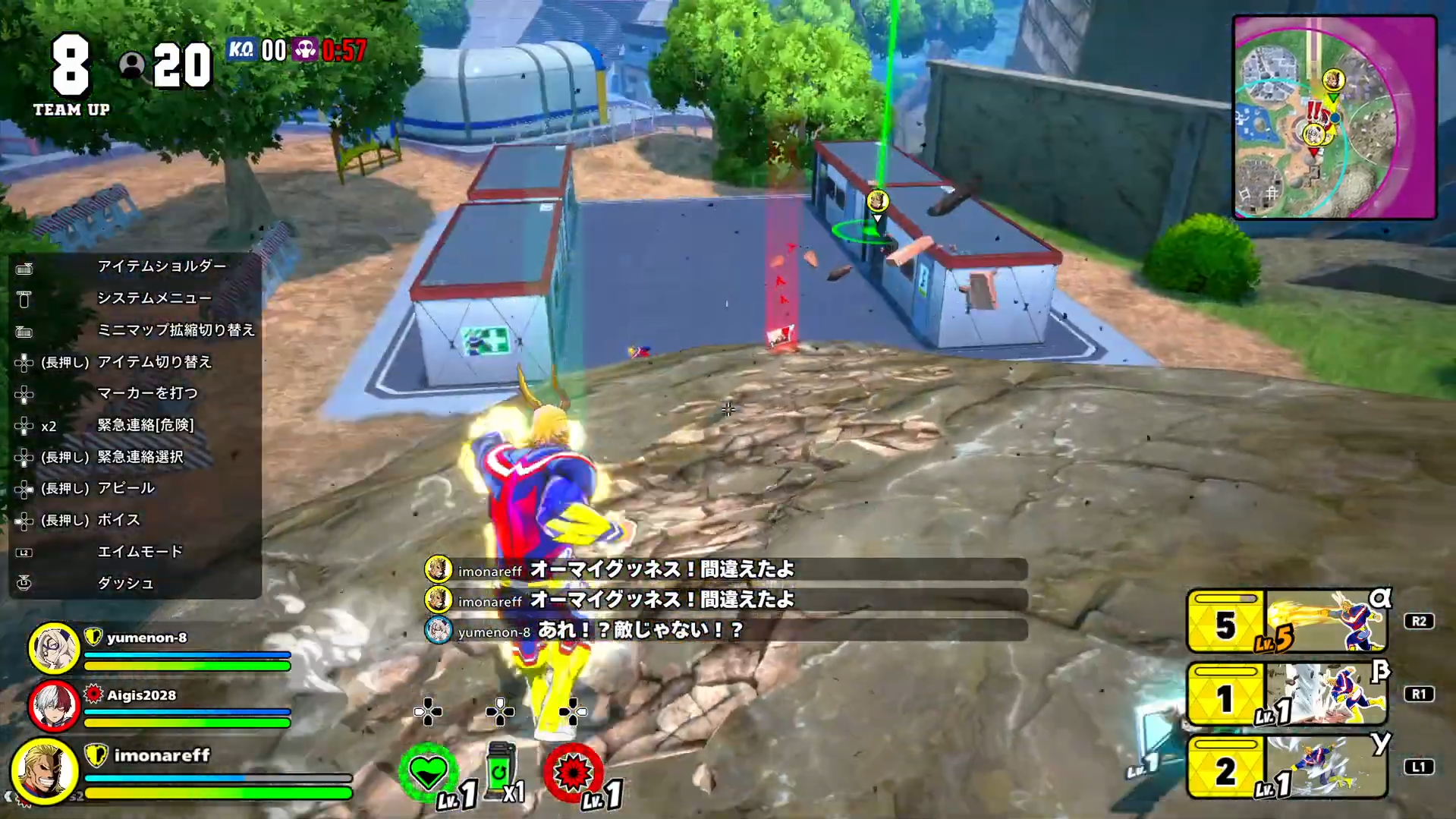
Plaza itself has pretty much always stayed the same, the surroundings however were a bit different, mostly in terms of the ground below the small surrounding buildings.
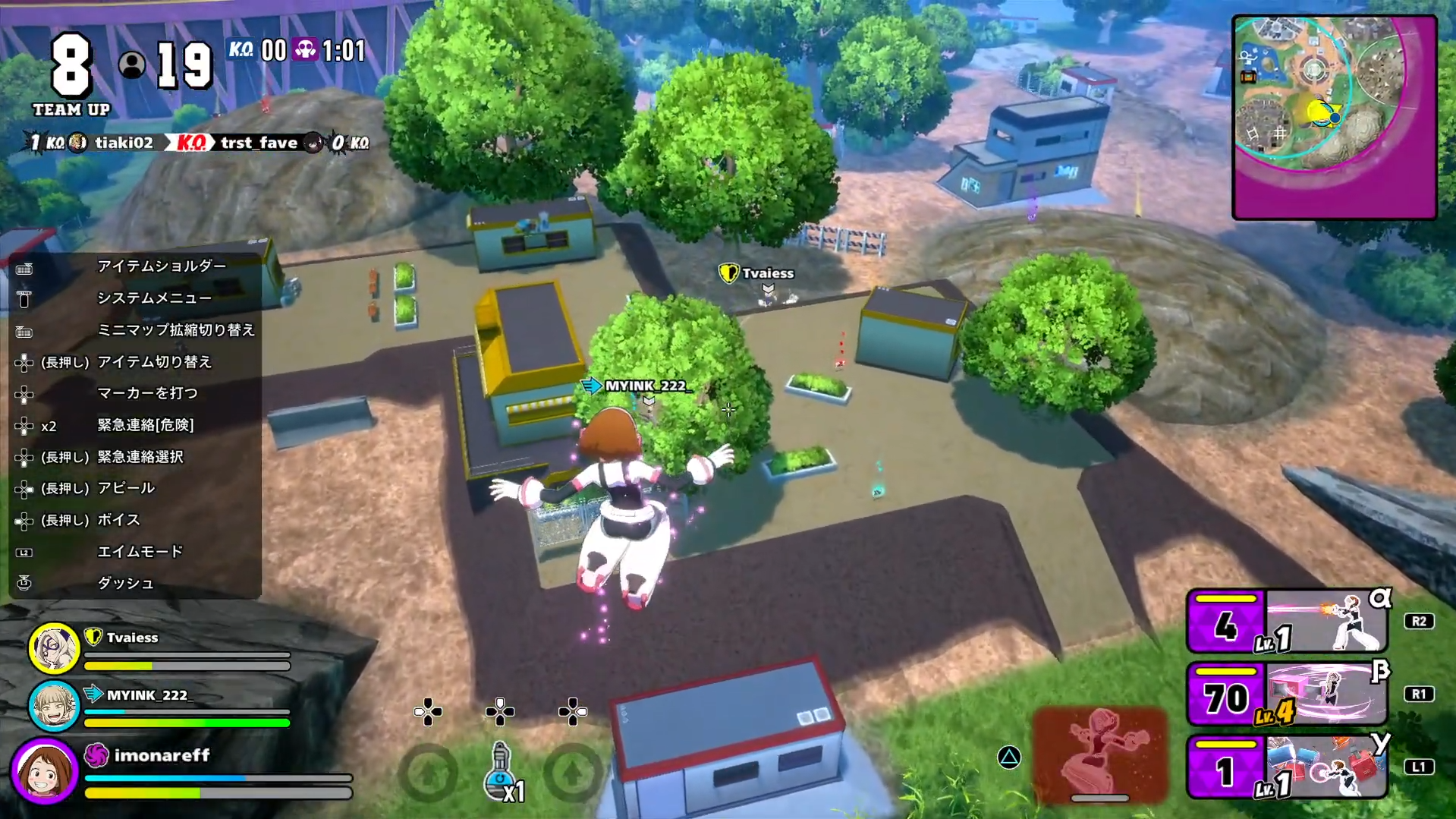
The Lobby: USJ Exterior
The lobby used to be different before they changed it in Season 3. This lobby featured a small plaza surrounded by road in front of the USJ building.
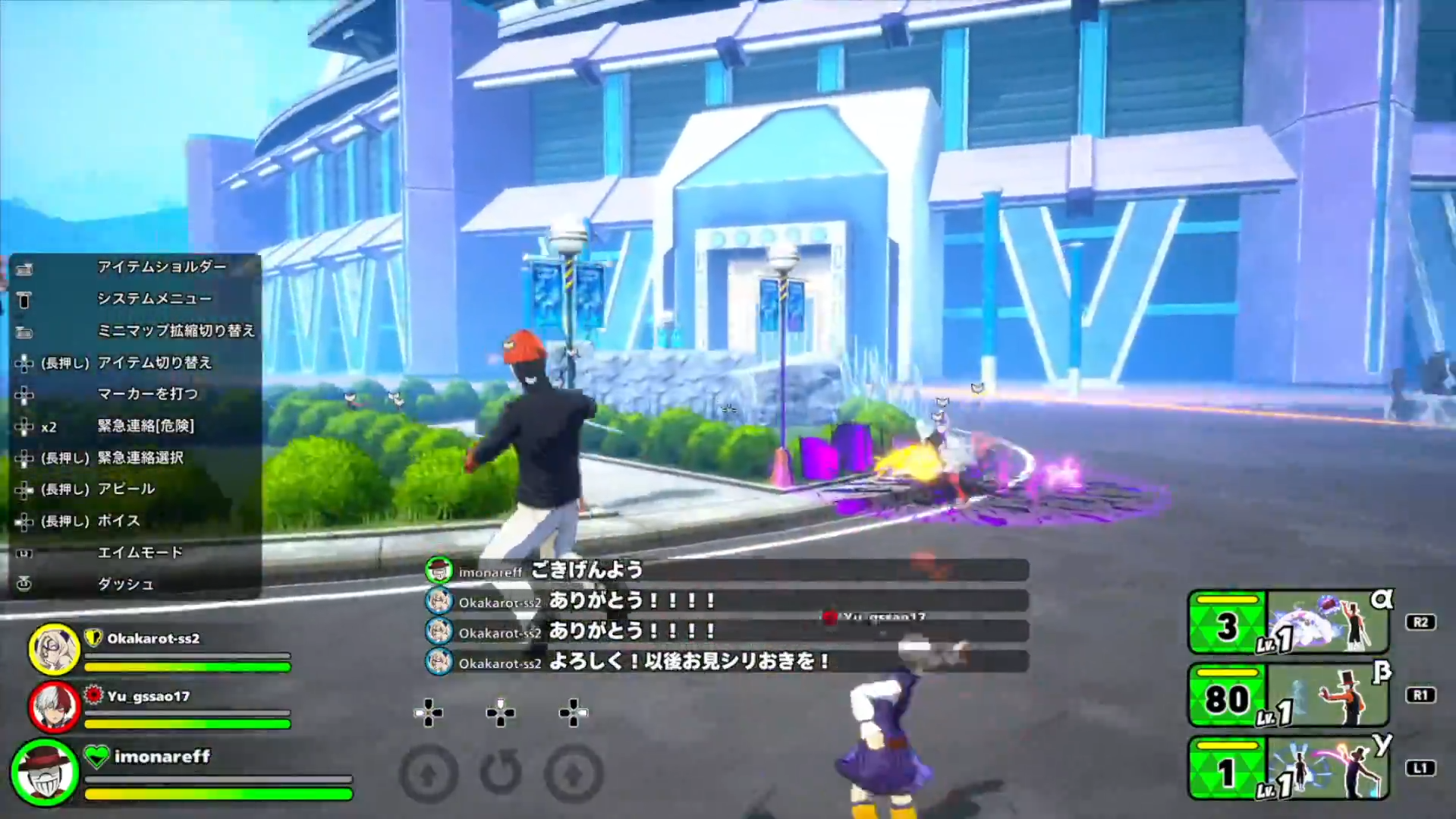
Gameplay
Character Skills
The points and comparisons drawn will mainly compare this beta to Season 1.
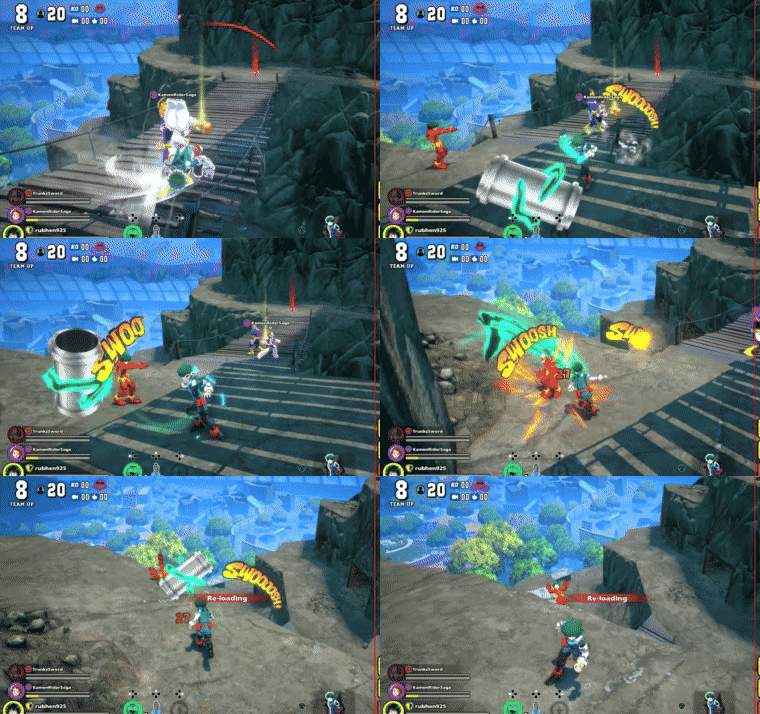
- Izuku Midoriya's alpha was quite bigger and had more visual effects to it, in current days his alpha is much more basic in this regard. His gamma could be held, which would trigger a currently unavailable attack where he would swing thick metal pipes around with blackwhip, dealing damage. Beta and Special Action are pretty much the same stats aside.
- Ochaco Uraraka's is a Rapid character in modern versions, but back in the CBT-1 she was a Technical character. Her skills were the same however, just balanced differently, for example, her alpha had 4 charges at levels 1-3, and 5 charges at levels 4-8.
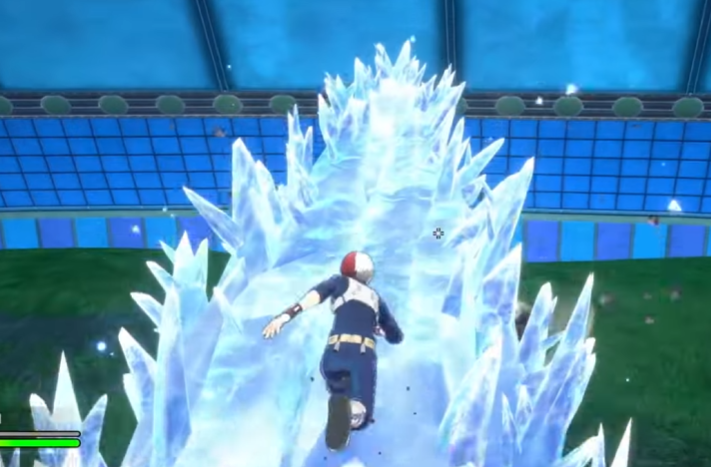
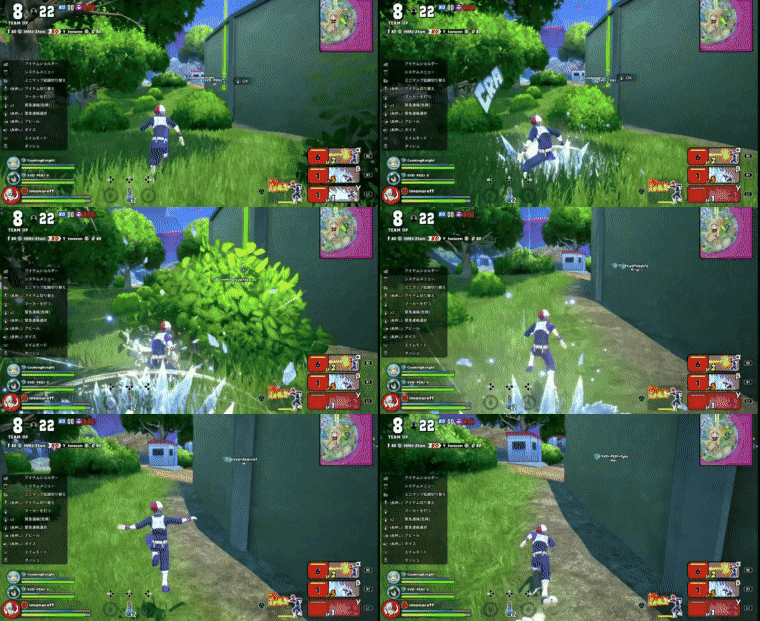
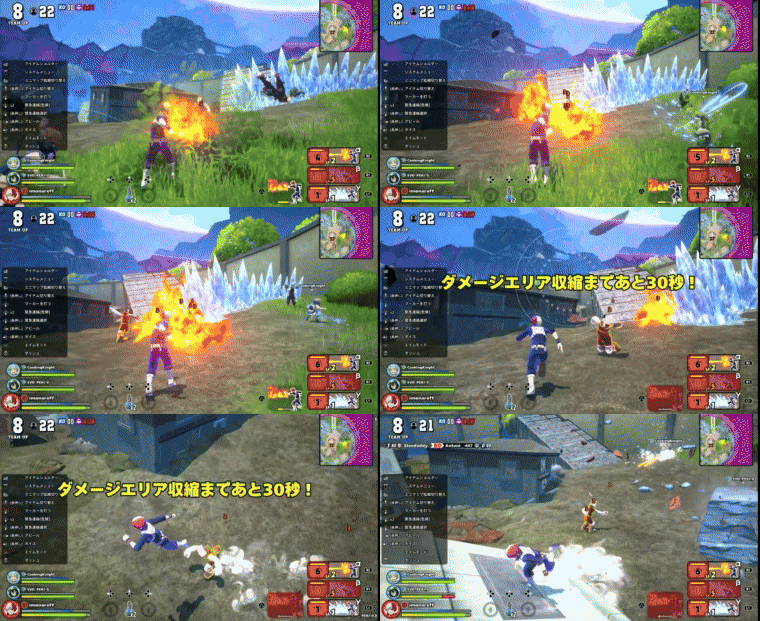
- Shoto Todoroki's beta skill used to create his Technical counterpart's beta instead of a bigger ice wall when reaching level 9. His special action used to be a flamethrower instead of a fire curtain. The rest of his kit has remained mostly the same mechanically.
- Tsuyu Asui was similar from a mechanical standpoint, except she could Wall Run just like Iida, and she also seemed to have a ranged grab similar to Aizawa's, but the details as how to trigger this grab are currently unknown.
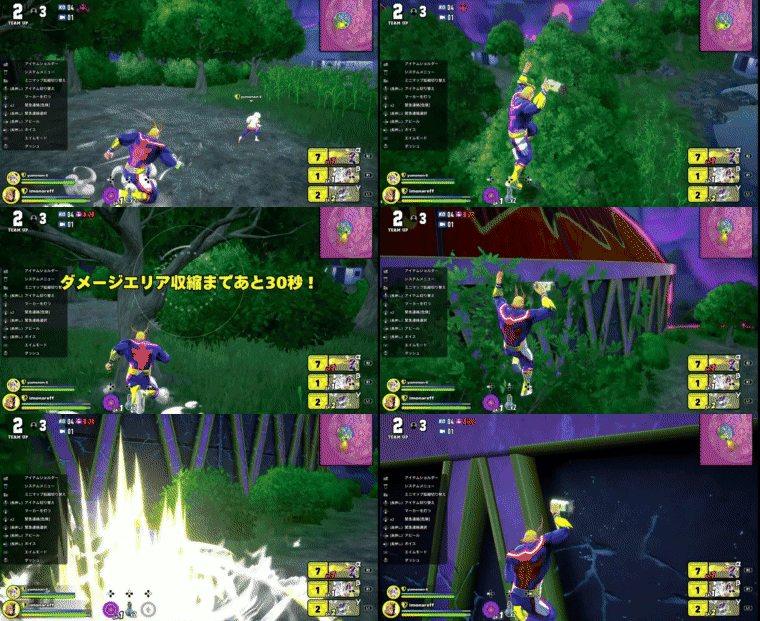
- All Might was mostly the same character as we know him today, however his alpha was bigger, gamma wasn't a percentage based skill and didn't protect from certain damage sources such as Shigaraki's beta, he also could hold the jump button to perform a weaker version of his current jump special action, this enhanced jump could be used over and over.
- Cementoss was pretty much the same character as we know him today. His special action allowed him to resurrect an ally while placing them in a concrete box, though this box was replaced by a wide block in Season 15.
- Mt Lady's animations in Giant Form were really fast back then, and it lasted for 40 seconds. The rest of her kit has remained fairly the same, though she had 6 beta charges.
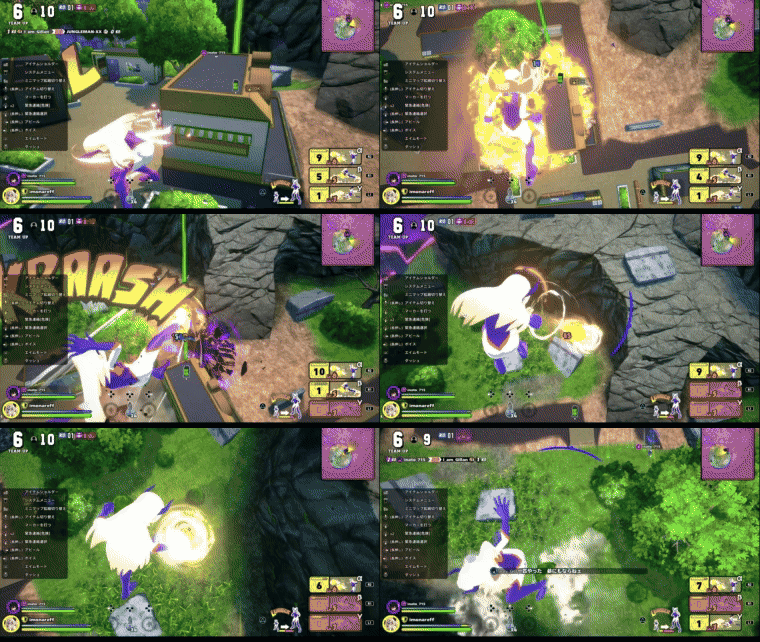
- Tomura Shigaraki's alpha skill was unable to travel up walls, making it extremely difficult for him to perform well in areas with medium-sized or tall buildings. This was later changed in Season 4. He also didn't have a special action in CBT-1.
- Dabi's alpha was much smaller back then, but seemed to have better tracking. His special action allowed him to cast a fire explosion that would damage nearby opponents and would briefly protect him from projectiles, but it did not allow him to stand up again, as that wasn't added until Season 4.
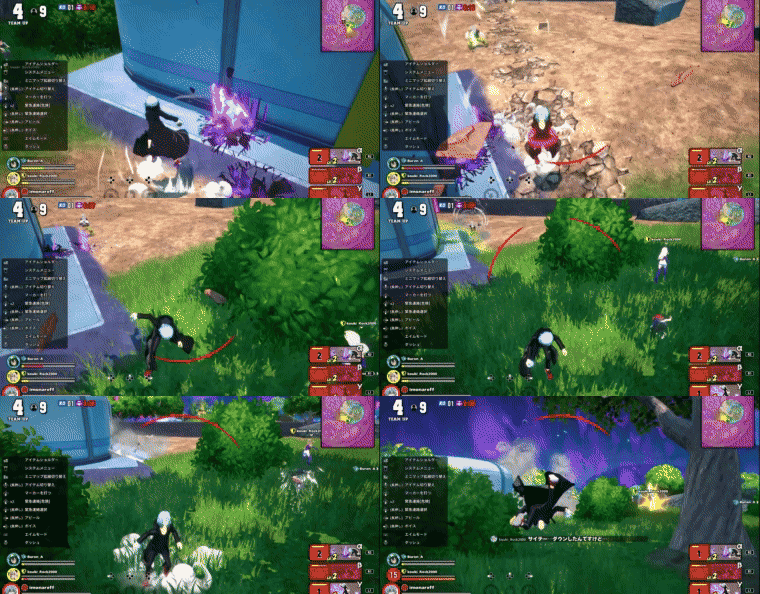
- Himiko Toga wasn't too different from her current version mechanically speaking, her beta worked more similarly to Assault Kirishima's alpha, and her Transform function wasn't a Special Action, but rather her gamma's functionality. This made it so that her transformation duration varied depending on whether her gamma was high or low level. This was later changed for Season 4, presumably due to the release of All For One.
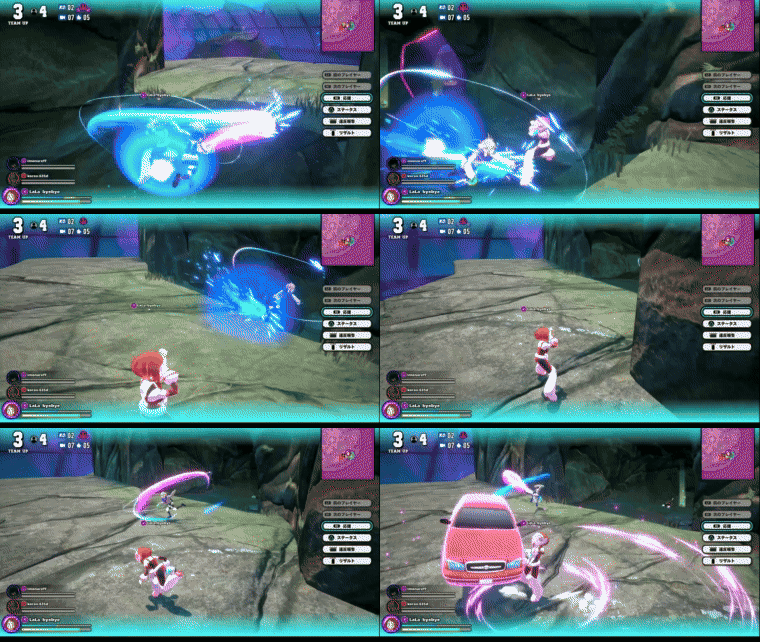
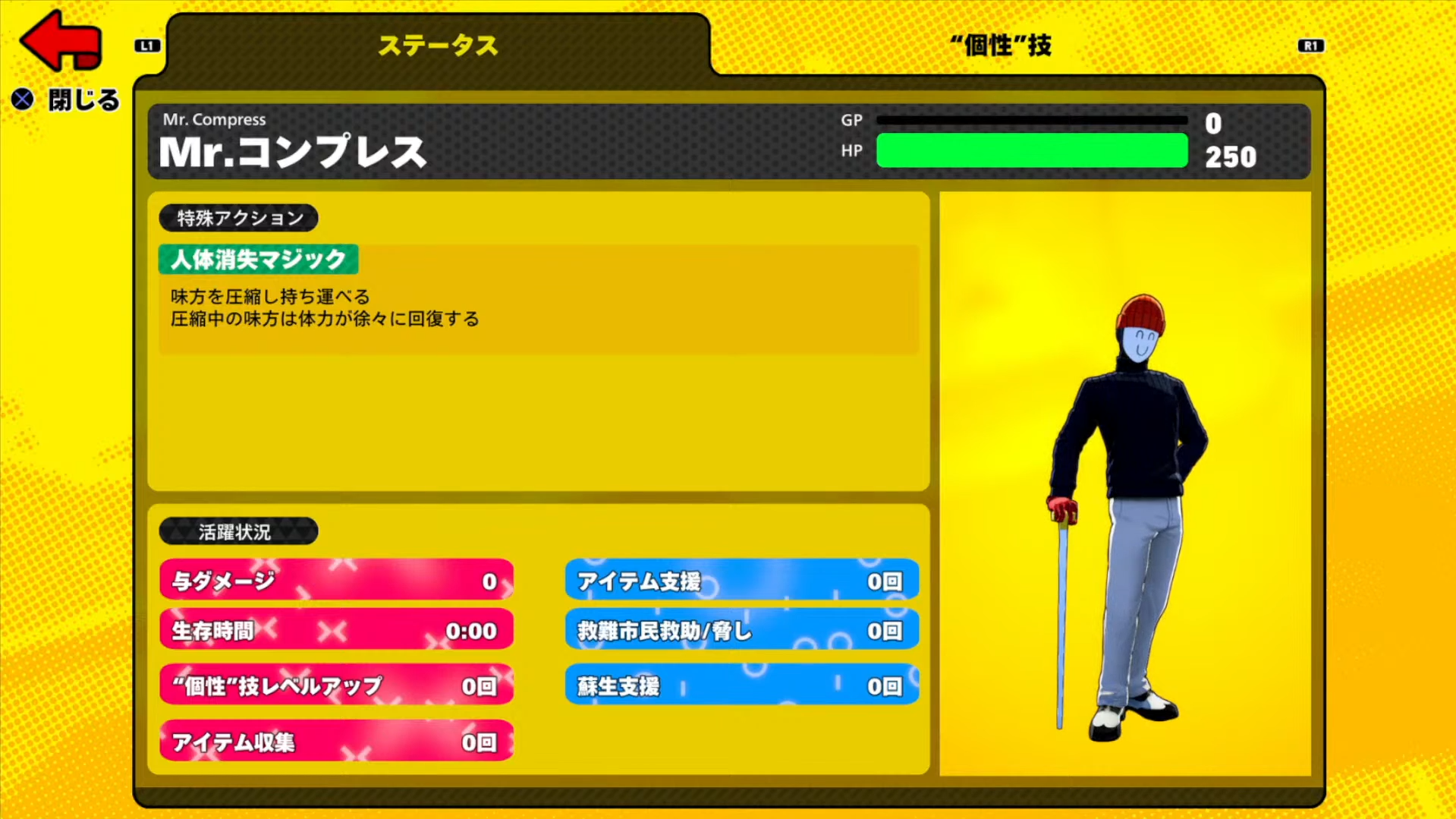
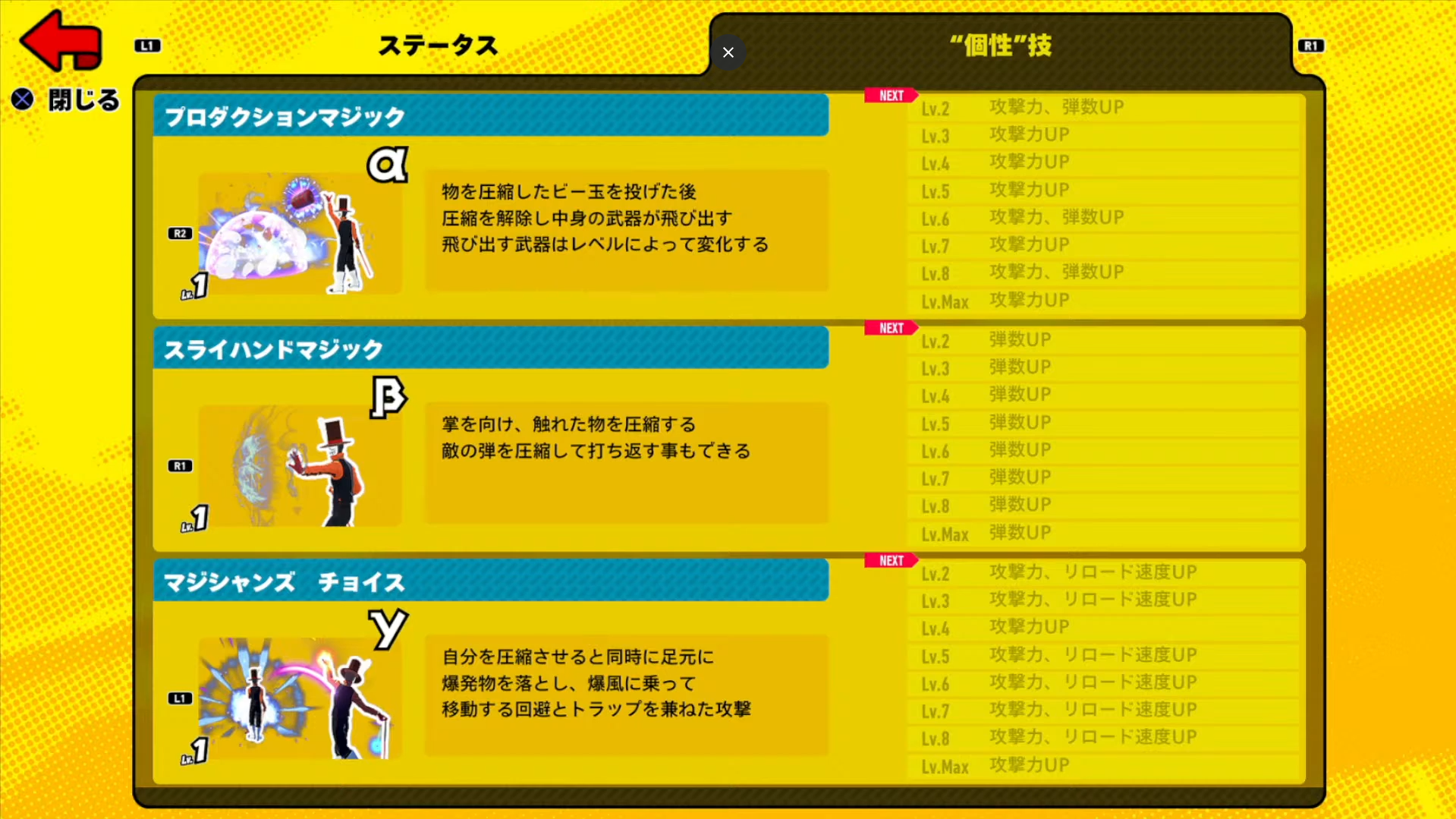
- Mr. Compress hasn't changed much mechanically compared to the CBT-1. His gamma's animation was quite slower, and his special action did not work on DOWNd bodies, as he didn't have the ability to resurrect allies, that came in Season 4. His beta also consumed shield durability by simply holding it.
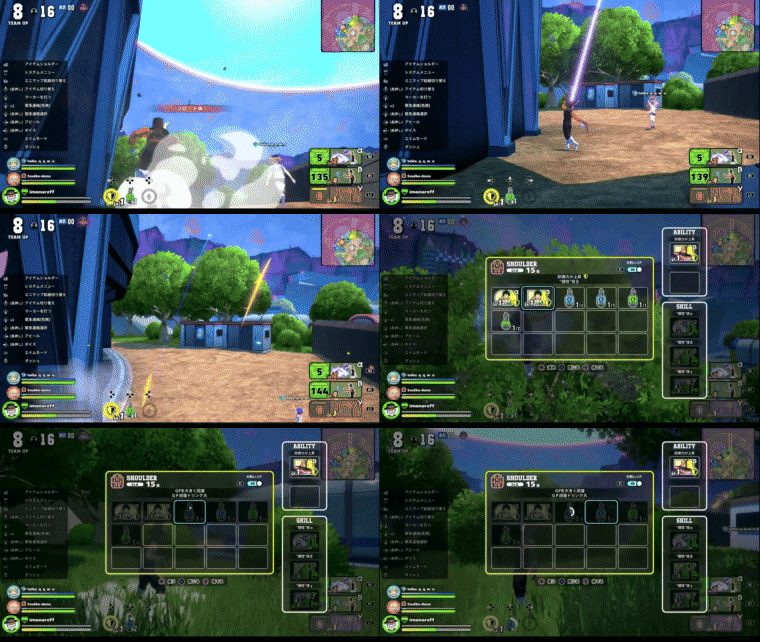
General Character Features
- The HP and GP of all characters was set to 250, meaning every character had a total health of 500.
- Back then, the DOWN HP of all characters was 120 instead of 400, allowing characters to confirm a kill with ease.
- In this version, Executes (the special attack that finishes DOWNd enemies in one blow) were much faster (pretty much instant) than in the present days, but they didn't give GP back.
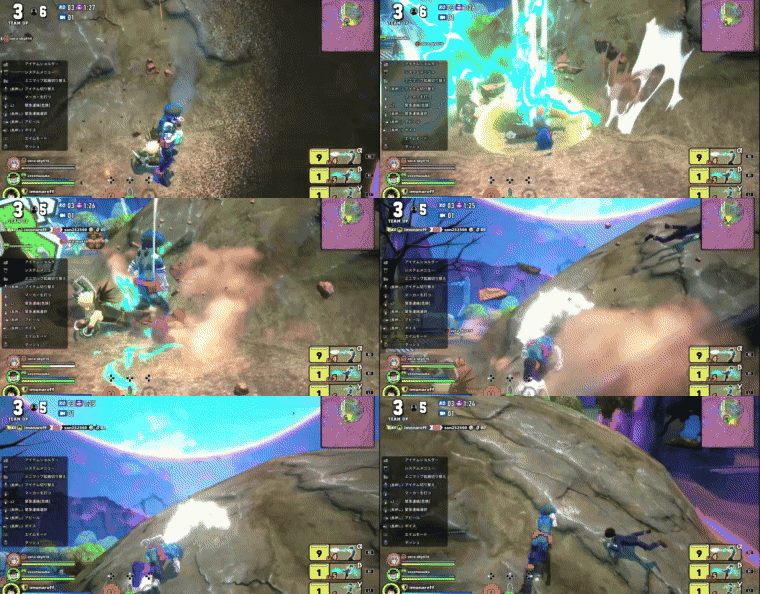
- The DOWN Timer was set to 15 seconds instead of 20, making it easier for players to get up after being DOWNd.
- Running Speed was quite slower than present day's, but Forward Jumps were stronger.
- Plus Ultra wasn't invented yet.
Battle Royale Gameplay and Systems
- The mechanic of reviving KOd teammates via Revive Cards and Player Badges did not exist. Once a player was KOd, they were dead for good. Civilians did exist, but they dropped 2 teamheals instead of the current 1. Civilian visual appearance was also different.
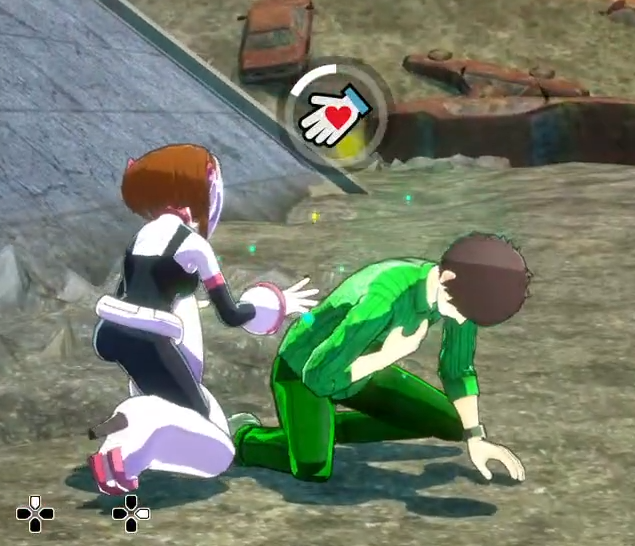
- Players would start matches with no GP at all.
- The DOWN sound effect and pop up would not show up if it was a teammate who DOWNd the enemy. Today we are used to hearing teammates DOWN enemies, but back then you could only see and hear your own.
- KOs were given to whoever KOd the enemy instead of whoever DOWNd them, so if you were the one to fight an enemy and DOWN them, but a teammate came in and KOd them, they would be the ones getting the kill.
- All the items we see in current Ultra Rumble were present in CBT-1 except for Revive Cards.
- Teamheals did not recover all HP or GP by default, and sometimes the amount of HP/GP recovered could be quite low, abpout 1/3 of the bar or less, while sometimes it would be high even without support teammates, perhaps teamheal healing increased if you had KOd teammates.
- Kota did exist in CBT-1, however when rescued he would only drop 1 Team Enhancement Kit instead of 3.
- (To be confirmed) Gold Item Boxes did not exist.
- Large Item Boxes opened instantly upon interacting with them.
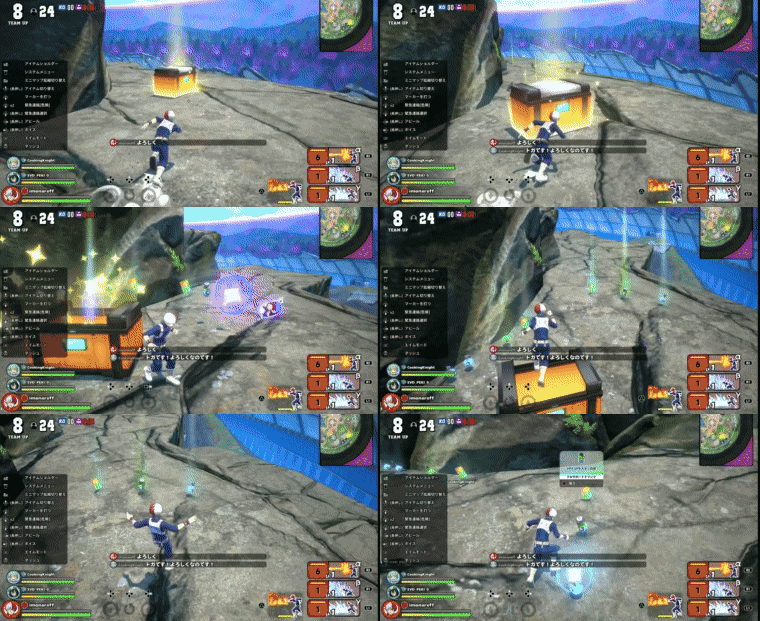
- Inventory Size was set to a default of 6 slots, and the game had 3 bag items (Small, Medium, Large) to expand inventory size. In a later season, Small Bags were removed from all maps and instead were made the default bag everyone now starts with (which has 9 slots).
- Class/Role buffs did not quite work like as of right now. It isn't fully known how they worked, but from our research, a Level 1 Deku Alpha did 40 DMG to most people, 32 DMG to some, and 22 DMG to one guy. One could do different amounts of DMG with the same attack on different people of the same team, so it's unclear if team buffs only applied to the character and not the whole team. However, it's clear that back then these buffs were way stronger, matching or going beyond that of current triple-stacking.
- The damage from DoTs (Damage over Time) statuses such as that from Burning or Blue Burning could be seen in-game just like the damage of any other skills.
- Ability Cards raised a skill's level by 2 instead of 1 if the character they displayed matched your current character.
- Rapid Ability Cards gave the character the ability to double jump (they still allowed to Wall Run).
- The special buff of the Support class MIGHT have been quicker drinking speed judging by the description of this role/class.
- Present Mic was not yet added as an announcer for matches.
- If the last team killed you, you would be taken straight to the score screen instead of seeing the enemy's win screen.
Systems and Currencies
- Gacha-only costumes did not show up in the Costumes screen if you didn't own them.
- Team codes were 3 digits longer.
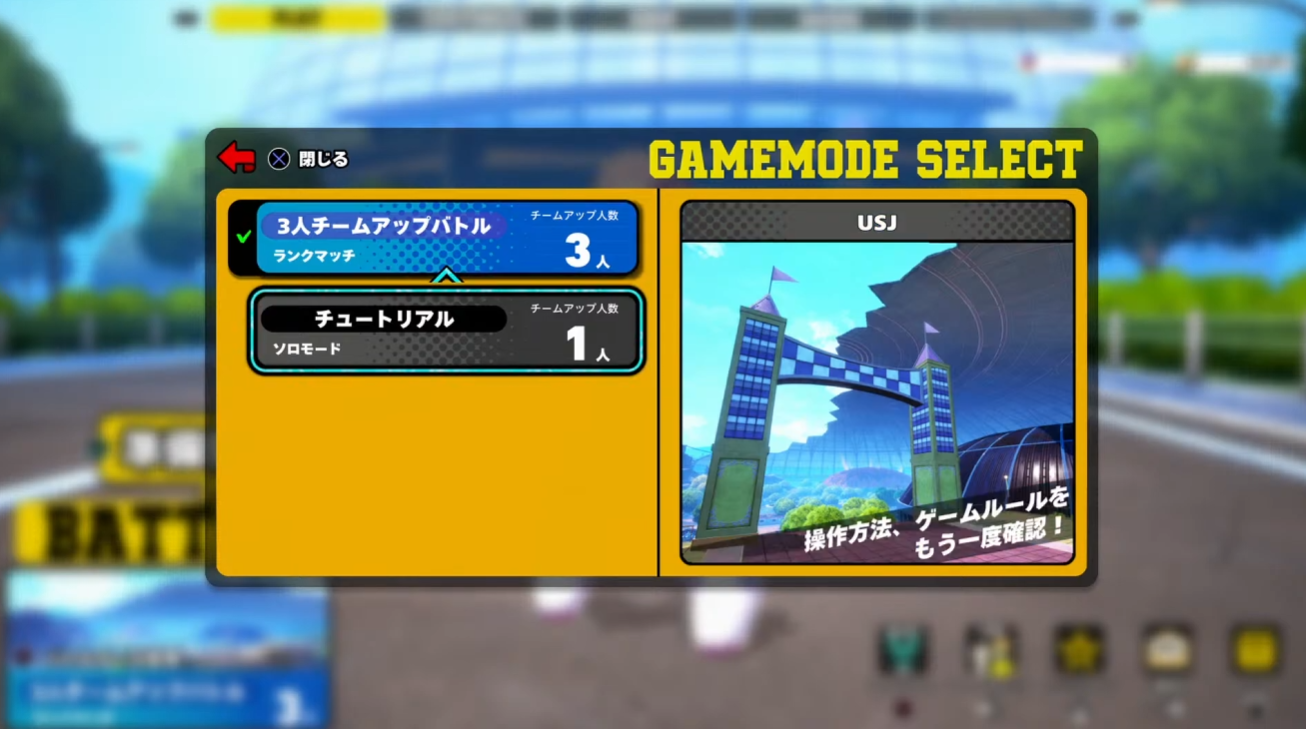
- The only available gamemodes were Ranked Match and Tutorial Mode.
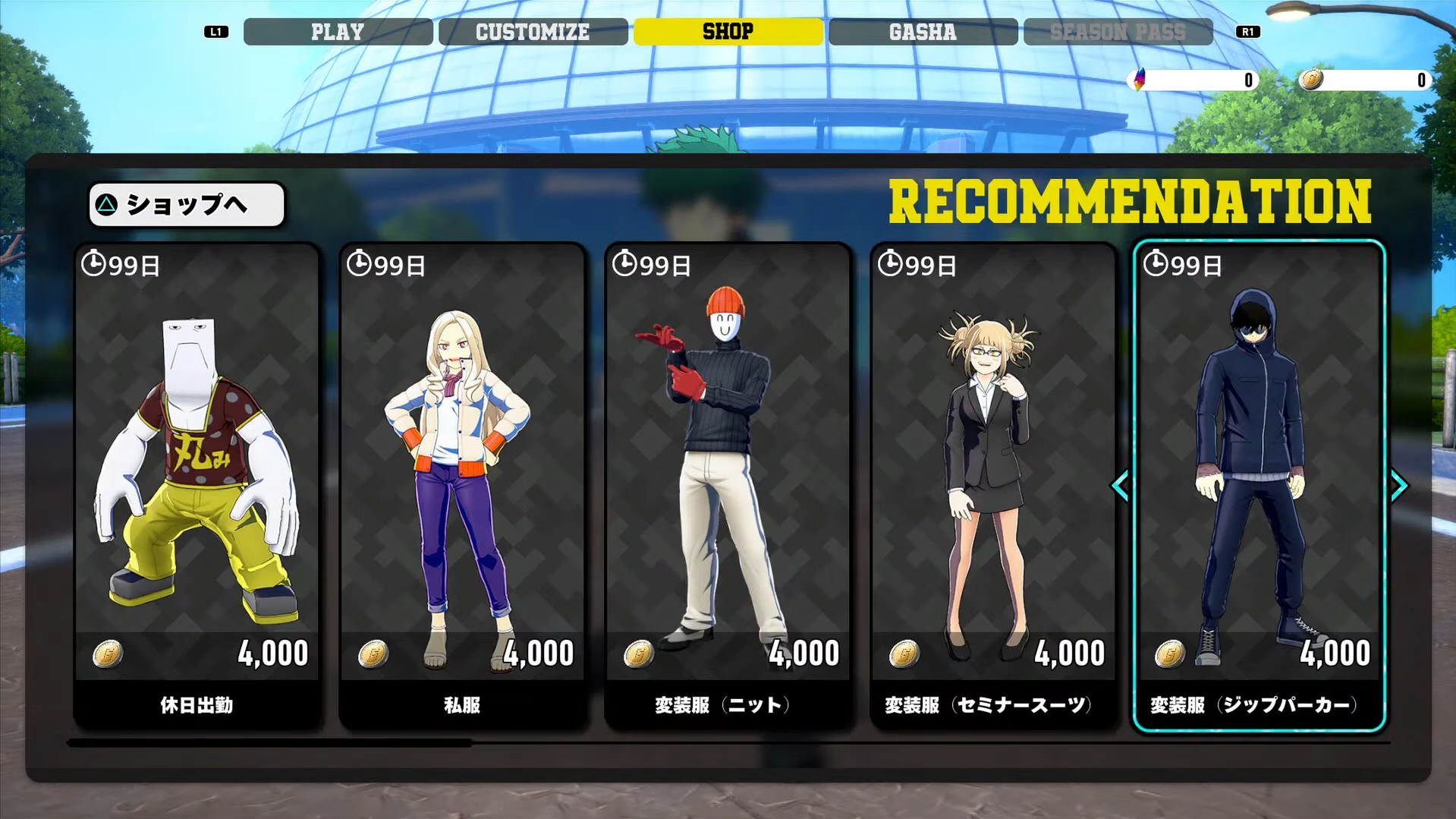
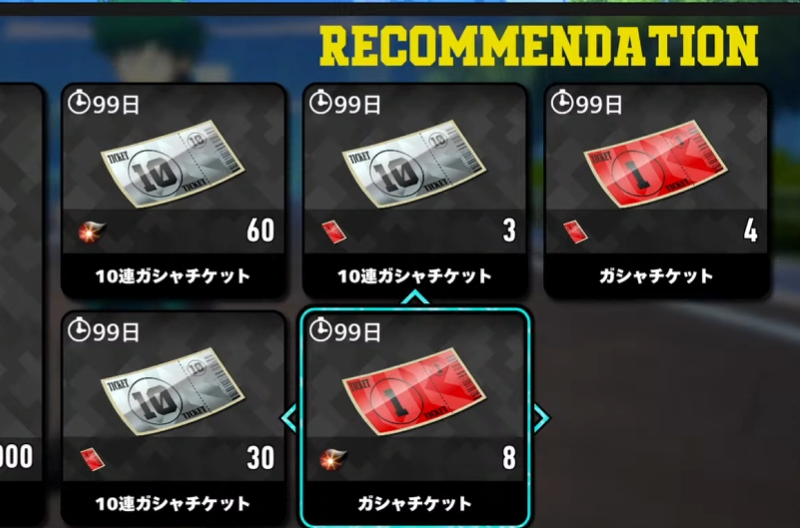
- The shop allowed you to purchase various non-color variant costumes for gold, as well as exchanging some currencies for Roll Tickets.
- Licenses and Agencies did not exist.
- "Dangerous" color variants didn't seem to exist yet, or at the very least none of the available outfits had a dangerous recolor.
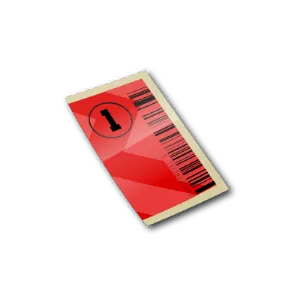
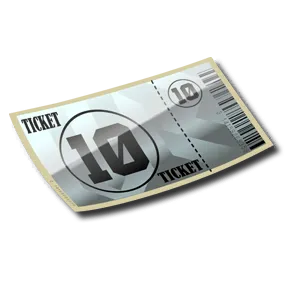
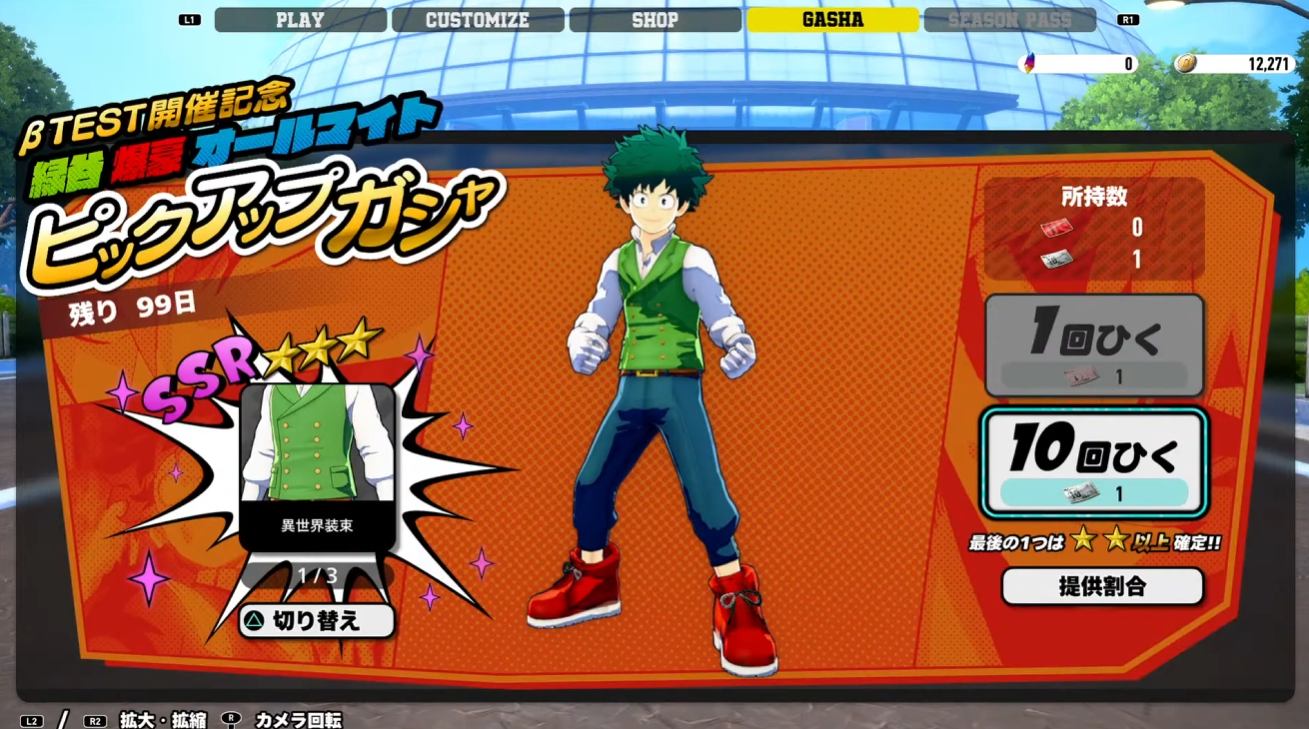
- The gacha currencies were a bit different, instead of only having Roll Tickets and Hero Crystals, the game also had Roll Ticket Fragments and x10 Roll Tickets. You could buy Roll Tickets with Roll Ticket Fragments, each Roll Ticket was equivalent to 1 pull. For 10 pulls you used a x10 Roll Ticket.
GUI
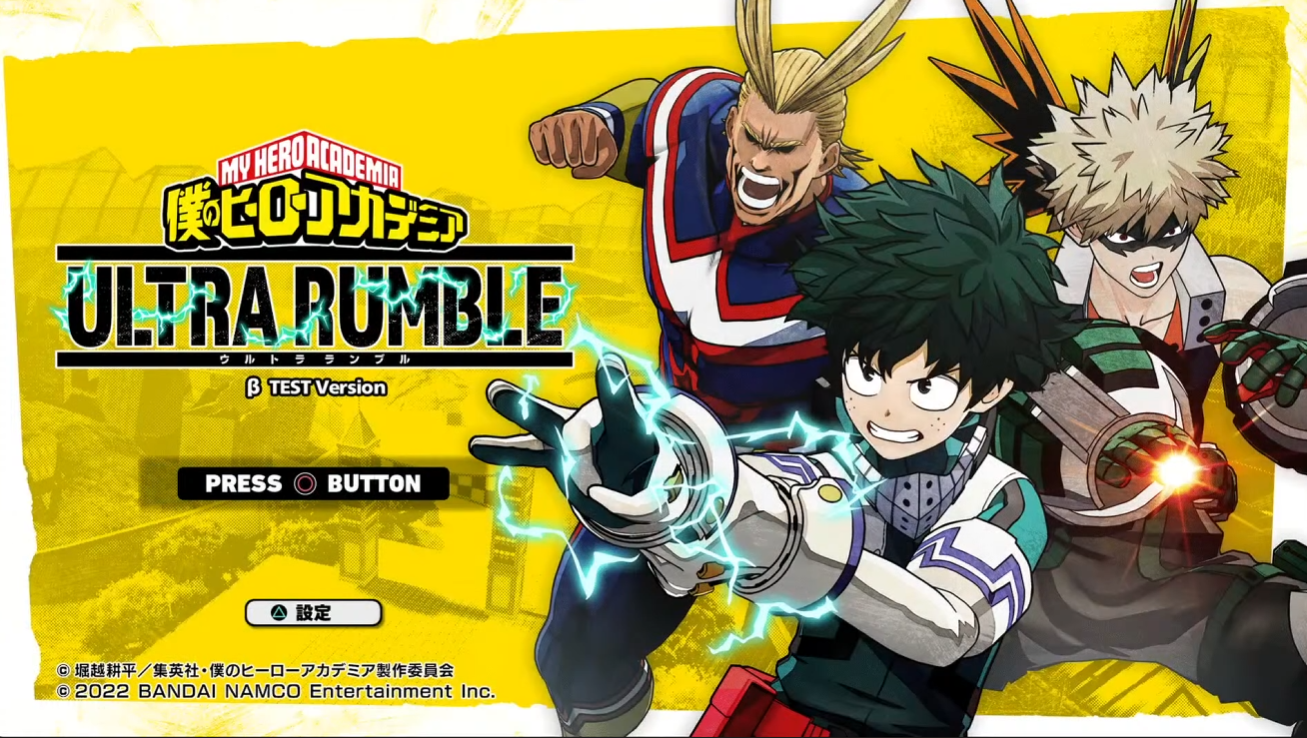
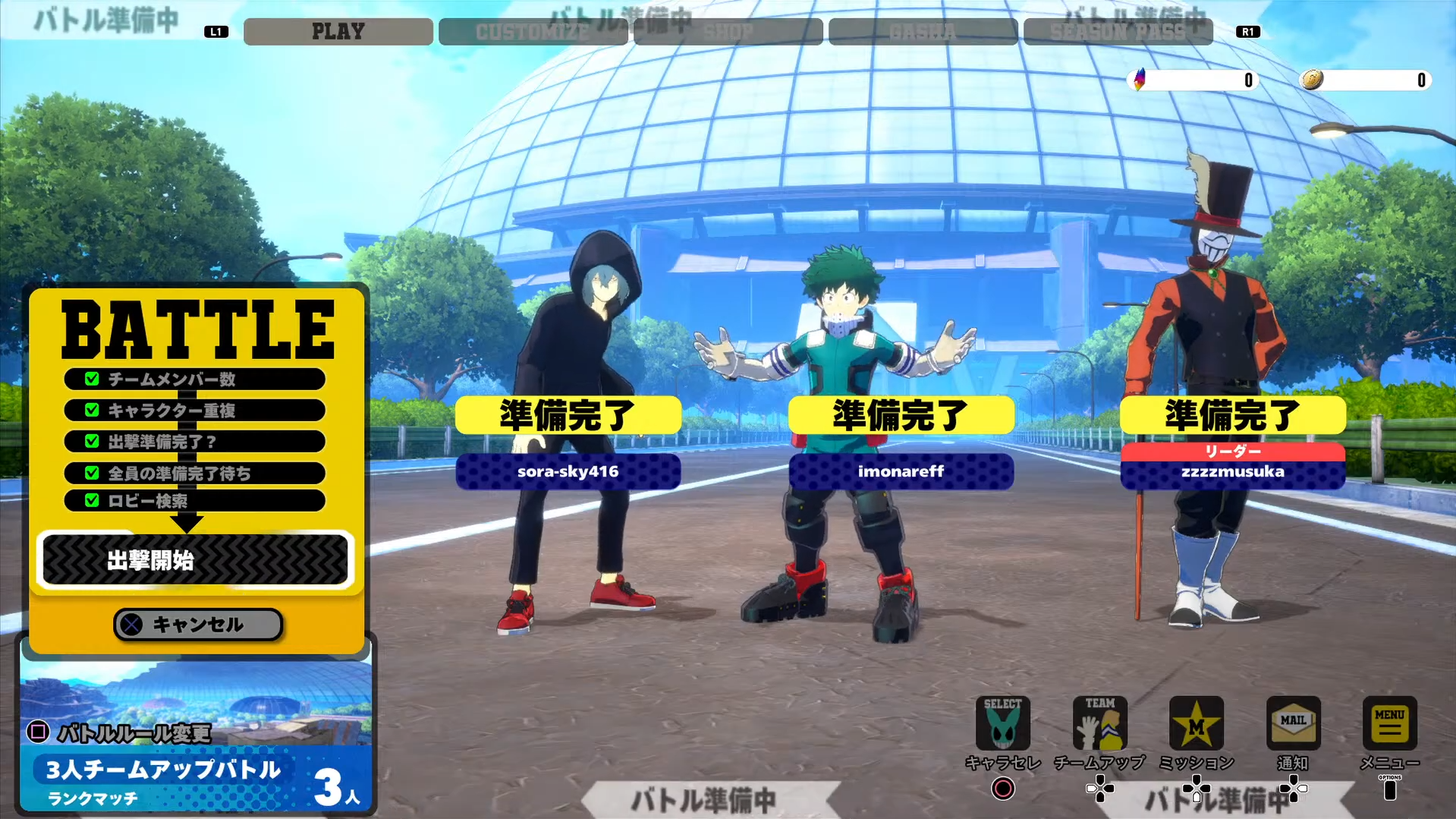
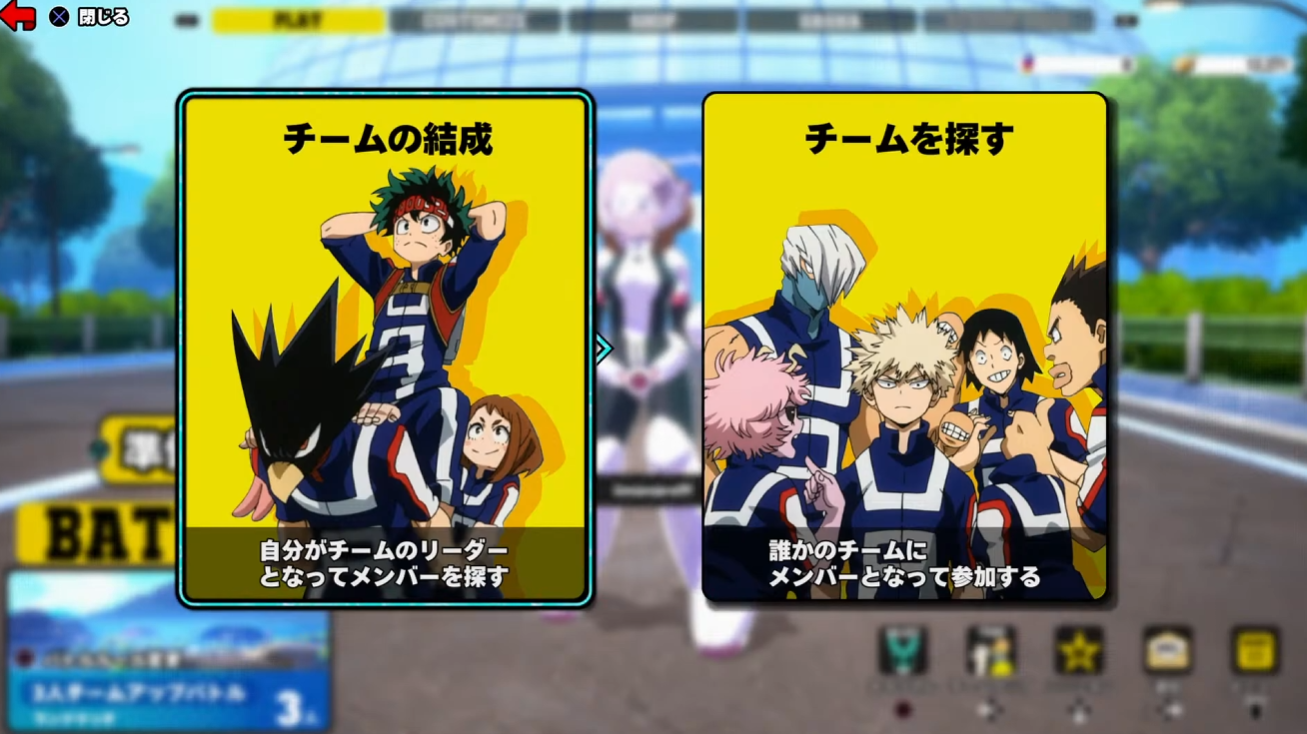
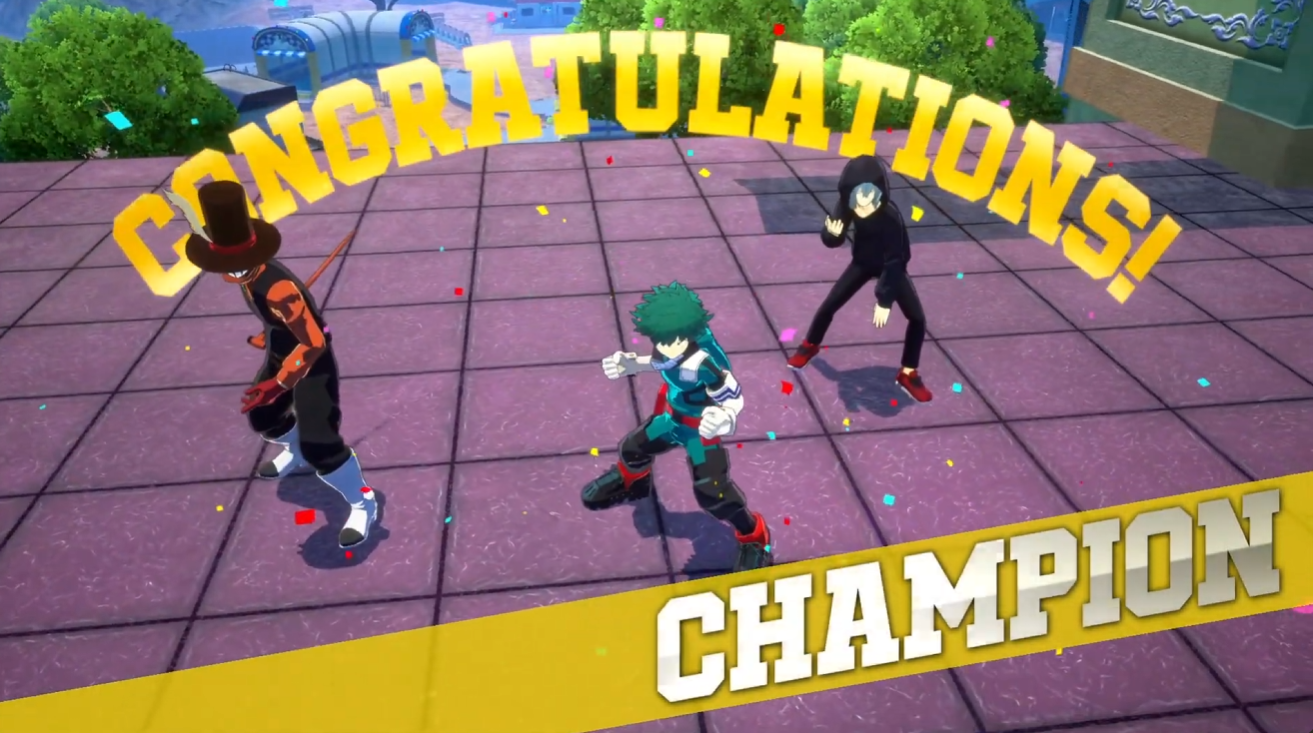
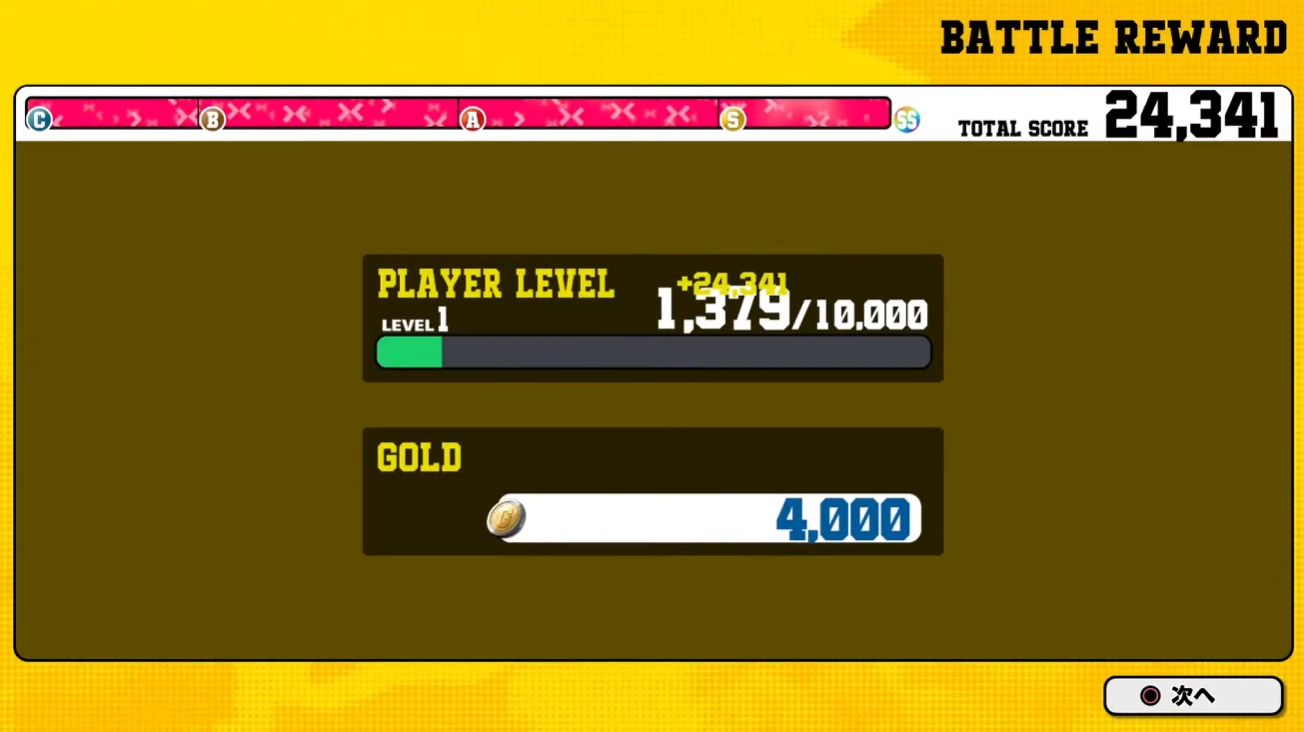
Here are some images from how the menus looked back then:
Bugs
- Ochaco Uraraka's alpha skill did not come out sometimes, making it hard to hit enemies or travel with it, as it would just fail.
- Shoto Todoroki's beta would sometimes not come out.
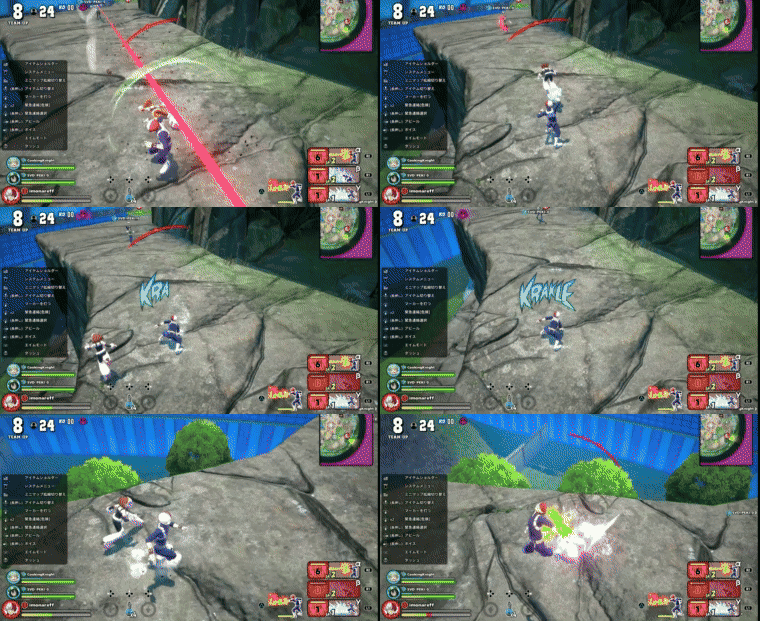
- After drinking a healing item, if the conditions were right the item's 3D model would not be removed after the item's consumption, making it so that your character would fight while holding the item in their hand.